Black Beans and Rodent Rice: Mier Expedition Rations

river battle, mier expedition, texas

The Mier Expedition was the last and the most disastrous of the raiding expeditions made from Texas into the area south of the Nueces River. Launched in November 1842 by a Texas militia, the attack was initiated partly in hopes of financial gain and partly in retaliation for the Dawson Massacre, during which the Mexican army killed thirty-six Texans.

The resulting battle ended bloodily. Some 650 Mexicans died, and 200 were wounded. The surviving Texans were taken prisoner. A few weeks later the majority of the prisoners escaped into the mountainous Mexican desert, only to be recaptured shortly thereafter. They were moved to El Rancho Salado, where it was agreed that one out of every ten of the 178 prisoners would be executed.

Continue reading
Traveling Beef Steak

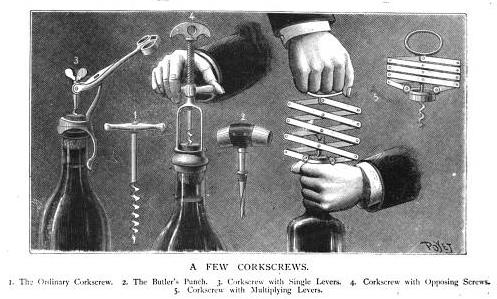
demonstration of various corkscrews

“All kitchens are alike, inasmuch as the various articles used for cooking purposes strongly resemble each other,” an 1851 article from Bizarre observes, “yet there is a marked difference in the quality of such instruments.” Indeed, some kitchen utensils seem altogether more useful than others. And though an anonymous reader of an 1896 edition of The American Kitchen Magazine warns readers about the dangers of “labor-saving machines” in the kitchen, earlier cooks welcomed ingenuity in the field of culinary arts.

Take for instance a particular invention of Sir Samuel Morland, who was known for his inquisitive mind, and who distinguished himself chiefly by his many mechanical inventions: the speaking trumpet, the fire engine, the steam engine, and the capstan for heaving anchors.

Continue reading

Tuesday Dinner at Maryland Insane Hospital

Maryland Sanitarium

The inmates of the Maryland Insane Hospital, we’re told, were exceedingly well-housed, well -clothed and well-fed. The hospital’s menu was lauded as an example of dietary excellence. According to a 1918 issue of Dietotherapy, inmates enjoyed such gustatory delights as beef tea, lemonade and, when cost did not prohibit it, fish on Fridays.

Such wholesome comestibles were rare in a time that saw egregious abuse of the mentally ill. But Maryland Insane Hospital was one of the most modern institutions of its kind. Now known as the Spring Grove Hospital Center, the hospital was established chiefly as a result of the lifelong individual efforts of Richard Spring Steuart, a Maryland physician and early pioneer in the treatment of mental illness. From its inception the asylum was the very picture of the well-managed institution. In 1884 the chairman of Maryland’s Joint Committee on Public Institutions found the asylum “in excellent condition,” a state which, he wrote, “reflects great credit upon its officers.”

Continue reading