Siberian Wintertime Diversions and Delectables

 
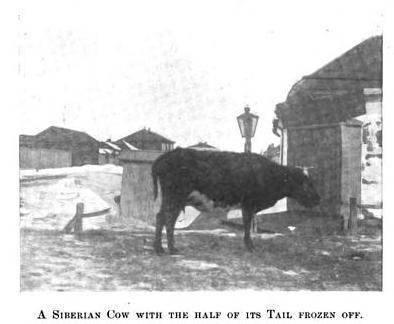
frostbitten cow in Siberia

Three letters dispatched from the Siberian city of Chita appeared in the February 14, 1920 issue of Soviet Russia: A Weekly Devoted to the Spread of Truth About Russia. Re-printed by the editor for their “rather interesting data concerning conditions in Siberia,” the letters paint a bleak but intriguing picture of life on the tundra.

The correspondent opens the first letter with a stoical weather report. “The temperature at present is 35 below zero,” he writes, “Last year’s coldest was 85 below zero. You find pigeons and sparrows lying dead in the streets where they fell frozen.” The relentless hyperborean cold struck down not only birds. “Human beings also have been found frozen to death in the streets,” he continues. “The poor, on finding the bodies, remove the clothing and put it on themselves. The naked bodies have been devoured by dogs, and now present a terrible sight.”

Continue reading
Bread Missiles in Bohemian San Francisco

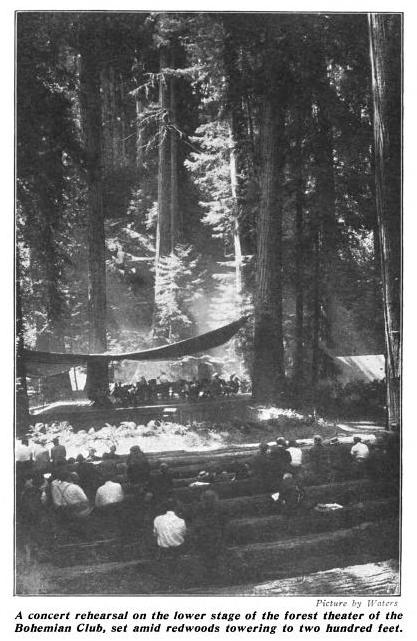
bohemian grove, northern california

In his 1914 collection of recipes and culinary anecdotes, Bohemian San Francisco: Its Restaurants and Their Most Famous Recipes, Clarence Edgar Edwords defines bohemianism as the “naturalism of refined people.”  He laments that this urbane sort of urban savagery has been made to serve as “the cloak of debauchery and the excuse for sex degradation,” and argues that bohemians’ “innate gentility” prevents “those things Society guards against.” So virtuous are the bohemians, in fact, that “men and women mingle in good fellowship and camaraderie without finding the sex question a necessary topic of conversation.” These noble, free souls “do not find it necessary to push exhilaration to intoxication; to increase their animation to boisterousness.”

Continue reading

The French Voyeur’s Broiled Mackerel


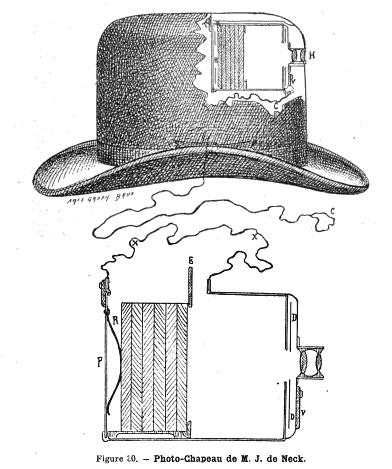
spy camera concealed in a hat

The narrator of Henri Barbusse’s 1908 novel The Inferno (L’Enfer) spends his days and nights peering through a chink in his boarding room wall, which he discovered shortly after taking possession of the room. He cannot help himself, he says, for as a man unmarried, rather short, with no children (and, he adds, who “shall have none”), as a man with whom “a line will end which has lasted since the beginning of humanity,” he felt himself “submerged in the positive nothingness of every day.”

He beguiles this positive nothingness by watching lovers couple, couples quarrel and old men die in the next room. He overhears confessions that make him question the existence of God. Slowly his knowledge of other lives becomes a burden. “I saw now how I should be punished for having entered into the living secrets of man.,” he reports. “I was destined to undergo the infinite misery I read in others…. Infinity is not what we think. We associate it with heroes of legend and romance, and we invest fiery, exceptional characters, like a Hamlet, with infinity as with a theatrical costume. But infinity reside quietly in that man who is just passing by on the street…. So, step by step, I followed the track of the infinite.”

Continue reading