Bedouin Tea: A Wandering People’s Enduring Comfort

The young woman in Albert Camus’s short story “The Adulterous Woman” finds herself in an Algerian hotel one night, alone with an indifferent and boorish husband.

While he sleeps soundly in bed she quietly leaves the room and walks to a nearby fortress. There she climbs to the fortress’s parapet and gazes out over the vast, seemingly empty desert before her. Suddenly she catches sight of a band of nomads and feels an indescribable sense of longing. “Homeless, cut off from the world,” the young woman observes, “they were a handful wandering over a vast territory.”

Alone upon the parapet, under a sky of glinting stars, she realizes the nomads of the Algerian desert possess a freedom she will never have, that despite being poverty-stricken, they are “free lords of a strange kingdom.”
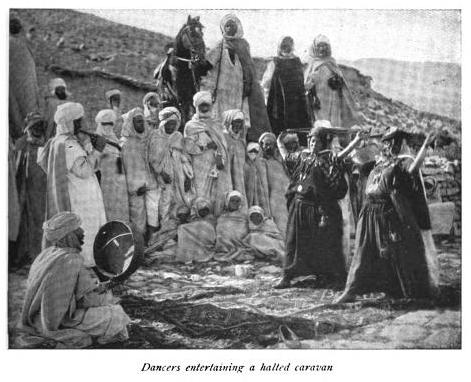
Bedouin nomads in North Africa


The sadness and longing felt by the woman in Camus’s story isn’t hard to imagine. The tribes of nomads that wandered the deserts of North Africa were indeed lords of a strange and desolate kingdom, where their sovereignty was seldom challenged for 1,300 years.

Otherwise known as Bedouins, they lived austere lives amid sun and sand, wandering from oasis to oasis, trading handicrafts and herding cattle. But despite their difficult lives, they developed a rich oral tradition of poetry and proverbs, as well as a complex culinary history, the ingredients for which they acquired through barter with more sedentary peoples.

The following recipe for spiced tea was, and still is, frequently enjoyed by the Bedouin. It’s a rare oasis in what can otherwise be a desert when it comes to flavorful fare. Experiment with different herbs and spices until you find a recipe that suits your taste.

Bedouin Tea

4 tsp dried thyme, or sage (Bedouins use the desert herbs habuck and marmaraya)
2 cardamon pods
1 cinnamon stick
4 teaspoons loose black tea
Honey, if desired

Heat 4 1/2 cups water with the thyme, cardamon pods, cinnamon stick and black tea. Simmer for five minutes. Turn off heat and steep for five minutes. Strain tea and serve with honey, if desired.


Why Fast and Fermented Foods by Christine Baumgarthuber

Would you rather receive The Austerity Kitchen by email? Then sign up for my Substack.

And, if you’d like to help the Kitchen keep cookin’, please consider picking up copies of my books, Why Fast? and Fermented Foods.

From the Viennese Woods: Bärlauch Soup

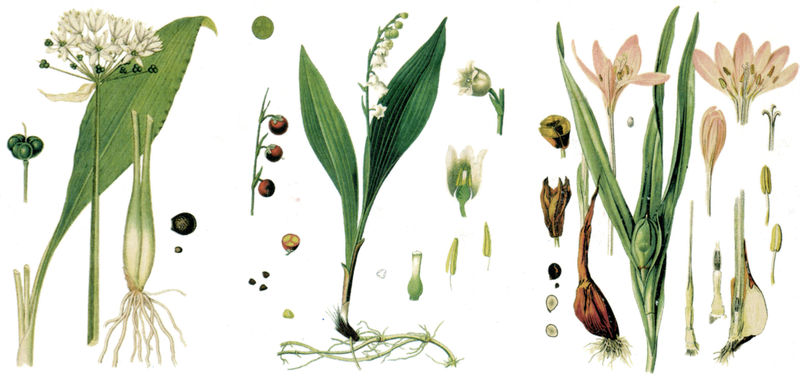
Walk through the Viennese woods on a warm, spring day and you will inevitably happen upon clusters of bärlauch, or wild garlic. Its pungent aroma fills the air, and its large emerald green leaves, out of which peek sprays of white flowers, carpet the forest floor.

To many Austrians, bärlauch is a welcome sight, one associated with springtime soups and tart, creamy spreads tasting of onion and chives.
A forest floor carpeted with bärlauch


But in days past bärlauch was more than just a springtime treat; it helped many Austrians survive the last days of the Second World War. During the cold, wet spring 0f 1945, when the Soviets broke through German defenses and advanced to Vienna, many civilians, faced with dwindling rations and little hope of securing fresh provisions, looked to bärlauch as an important source of food. Those lucky enough to own a Sommerhütte, or summer cabin, fled to the rolling hills of the Viennese woods, where the plant grows in abundance. There they harvested the bärlauch clusters and prepared simple soups, without cream or seasoning.


Bärlauch


Bärlauch soup was usually the only meal of the day in those summer cabins. The garlicly broth was welcome, though; filled with vitamin C and other nutrients, it helped many Austrians fend off starvation during the final days of battle that spring of 1945.

Here’s a traditional bärlauch soup recipe translated from the German. While not as austere as the soup eaten during the war, it is just as nourishing. You can find bärlauch, also known as ramson, growing wild in deciduous forests.

Bärlauch Soup

50 grams bärlauch
1 onion
20 grams butter
20 grams flour
1/8 liter milk
3/4 liter soup stock
white pepper
salt
100 grams cream

Wash the bärlauch thoroughly and cut it into thin strips. Dice the onion and place in a large soup pot with the butter. Cook over medium heat until the onions are transparent. Add the flour, mix into the onions and then add the milk, making a smooth sauce. Add the soup stock and bärlauch strips. Cook the soup for ten minutes on low heat.

Puree the soup with either with a handmixer, or in a food processor. Season with white pepper and salt.

Beat the cream until stiff. Shortly before serving, whisk the beaten cream into the soup. Serve with a crusty white bread, such as Vienna rolls.


Why Fast and Fermented Foods by Christine Baumgarthuber

Would you rather receive The Austerity Kitchen by email? Then sign up for my Substack.

And, if you’d like to help the Kitchen keep cookin’, please consider picking up copies of my books, Why Fast? and Fermented Foods.
Girl Scout Fare: Biscuit Loaf

“A Girl Scout is Thrifty”

Taken from the 1920 Scouting for Girls, the original Girl Scouting handbook, the motto above was one of ten that American Girl Scouts lived by. Started in 1912 by Mrs. Juliette Low, the Girl Scouts encouraged independence, thrift, cheerfulness, loyalty and obedience. The ideal Girl Scout was brave and resourceful. She knew first aid and how to best store potatoes in a country cellar. She could march for miles in pouring rain and decode semaphore signals. Like their British sisters, the American Girl Scouts were intended to be an asset to both family and country.

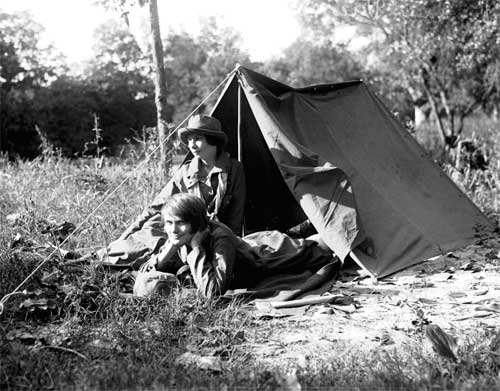
The Girl Scouts also sought to foster a love of the outdoors, and frequent camping trips taught young scouts how to deftly withstand the elements and cultivate survival skills like fire building and outdoor cookery. Girl Scout camps lacked frills — just a few spare shelters of canvas and wood in which to pass the night sufficed for the troops. During meals, the scouts prepared their provisions in tin pots and frying pans, using “camp cranes,” a horse of pine tree branches, to hold the larger pots over the camp fire.

Girl scouts and tent in camp early 20th century
Girl Scouts at camp

Simple fare nourished the Girl Scouts. They enjoyed beef stews, boiled potatoes and hot cocoa on their camping trips. “Biscuit Loaf,” the standard camp bread, was especially popular; it accompanied almost every meal. Here’s a recipe from the 1920 handbook. You need not make this bread over a camp fire, however. Bake it in a medium oven ( 350 degrees F.) for approximately one hour, or until golden brown.

Biscuit Loaf

(Serves 4)

3 pints flour, 3 heaping teaspoonfuls baking powder, 1 heaping teaspoonful salt, 2 heaping tablespoonfuls cold grease, 1 scant pint cold water. Amount of water varies according to quality of flour.

Mix thoroughly, with a big spoon or wooden paddle, first the baking powder with the flour and then the salt. Rub into this the cold grease (which may be lard, cold pork fat, drippings) until there are no lumps left and no grease adhering to the bottom of the pan. This is a little tedious, but don’t shirk it.

Then stir in the water and work it with spoon until you have a rather stiff dough. Have the pan greased. Turn the load into it and bake. Test center of loaf with a sliver when you think properly done. When no dough adheres remove bread. All hot breads should be broken with the hand, never cut.

To freshen any that is left over and dried out, sprinkle a little water over it and heat through. This can be done but once.


Why Fast and Fermented Foods by Christine Baumgarthuber

Would you rather receive The Austerity Kitchen by email? Then sign up for my Substack.

And, if you’d like to help the Kitchen keep cookin’, please consider picking up copies of my books, Why Fast? and Fermented Foods.