Modernistic Tomato Soup

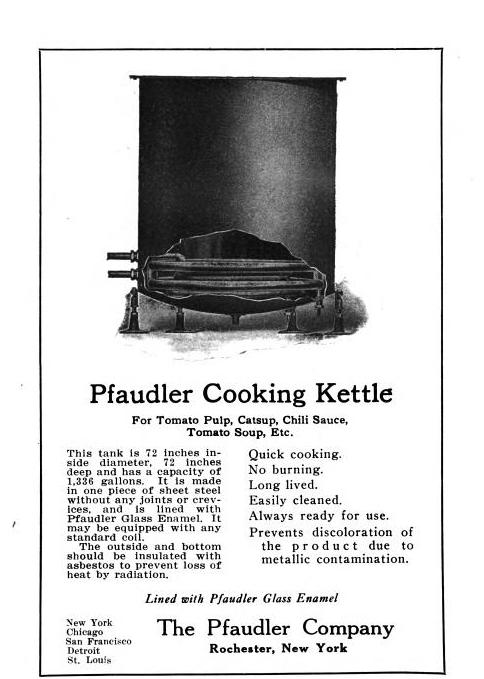
vintage ad for a canning kettling


Canned tomato soup has its charms. Or at least so believes Wayland Gladstone Hier, who, in The Manufacture of Tomato Products: Including Whole Tomato Pulp or Puree, Tomato Catsup, Chili Sauce, Tomato Soup, Trimming Pulp (1919), tells us that “canned tomato soup is a commodity which is increasing in favor with the housewife.” She is lured, Hier explains, by its easy modernity. “How much more convenient the modern way is,” he writes, “and when the quality is just as good and often better than can be obtained the long troublesome way, it is natural that canned tomato soup should become increasingly popular.” Canned tomato soup, Hier concludes, “is also cheaper than buying the canned tomatoes and making the soup from them.”

If you too find canned tomato soup an alluring food, but think it too insipid for the dinner table, try the following “modernistic” recipe for tomato soup with stock from Jessie Marie De Both’s Modernistic Recipe-Menu Book of the DeBoth Homemaker’s Cooking School (1929). It’s economical and avant-garde (by early-twentieth-century standards, that is).

Tomato Soup with Stock

1 chopped onion… 2 whole cloves… 1/2 teaspoon celery seed… 6 each peppercorns and tomatoes, or 1 qt canned tomatoes… 1 tablespoon flour… 1 tablespoon shortening

Take bones and trimmings from roast beef or steak. Cover with cold water, twice as much as the meat, add seasonings and cook slowly 2 1/2 hours. Skim off fat, add tomatoes (cook 1/2 hour if fresh tomatoes are used). Skim out bones and meat, and strain liquor through a puree strainer, rubbing all the pulp through. Heat, thicken with flour cooked with the shortening. Serves 8


Why Fast and Fermented Foods by Christine Baumgarthuber

Would you rather receive The Austerity Kitchen by email? Then sign up for my Substack.

And, if you’d like to help the Kitchen keep cookin’, please consider picking up copies of my books, Why Fast? and Fermented Foods.

Murder in the Kitchen: Braised Pigeons on Croûtons

hunter with a brace of game


Writer Alice B. Toklas was once asked to smother six pigeons. It was after the war. She was in Paris, enjoying the city’s gustatory bounty. One afternoon, while walking past his loge, she heard the concierge call her name. She turned to find him breathlessly insisting he had a surprise for her. “He said he would bring it to me,” she writes in The Alice B. Toklas Cookbook (1954), “which he did and which I wished he hadn’t when I saw what it was, a crate of six white pigeons and a note from a friend saying she had nothing better to offer us from her home in the country, ending with But as Alice is clever she will make something delicious of them.”

Alice did make something delicious of her hapless feathered charges. Emboldened by a “large cup of strong black coffee,” she “found the spot on poor innocent Dove’s throat” where she was to press until the bird expired. One by one she smothered her white pigeons, realizing with the yielding silence of each death that “there was no denying one could become accustomed to murdering.”

Toklas turned her avian victims into a simple but delectable dish of braised pigeons on croûtons. If you don’t feel up to smothering six pigeons, use (already smothered) Cornish hens instead.

Braised Pigeons on Croûtons

For 6 pigeons cut 1/2 lb. salt pork in small cubes, place in Dutch oven with 6 tablespoons butter, place pigeons in oven, brown slightly, cover and cook over low flame for 1 hour turning and basting frequently. While pigeons are cooking wash and carefully dry 2 lbs. mushrooms. Chop them very fine, and pass through a coarse sieve, cook over brisk fire in 1/4 lb. butter until liquid has evaporated. Reduce flame and add 1 cup heavy cream sauce and 1/2 cup heavy cream. Spread on 6 one-half-inch slices of bread that have been lightly browned in butter. Spread the purée of mushrooms on the croûtons. Place the pigeons on the croûtons. Skim the fat from the juice in the Dutch oven, add 2 tablespoons Madeira, bring to a boil and pour over pigeons. Salt for this dish depends upon how salty the pork is. Serves 6 to 12 according to size of pigeons.


Why Fast and Fermented Foods by Christine Baumgarthuber

Would you rather receive The Austerity Kitchen by email? Then sign up for my Substack.

And, if you’d like to help the Kitchen keep cookin’, please consider picking up copies of my books, Why Fast? and Fermented Foods.

Porridge for One: The Tale of the Grub Street Hermit

Henry Welby, The Grub Street Hermit


In his youth Mr. Henry Welby, the man who would later become known as the “Grub Street Hermit,” enjoyed riches, talents, and, above all, popularity. Contemporary accounts describe Welby as a sympathetic gentlemen much beloved in his neighborhood of Grantham. Yet, despite such esteem, Welby at around age forty decided to leave his tranquil home nestled among the gentle green hills of Lincolnshire and move to colorful, riotous London.

What happened to Welby in London remains for the most part a mystery; all that is known is that he became a hermit. A curious document published in 1637 attempts to untangle the strange knot of events that led to Welby’s retreat into solitude. “This Gentleman, Master Henry Welby, was Forty Years of Age before he took this solitary Life,” the document reports.

Those who knew him, and were conversant with him in his former Time, do report, that he was of a middle Stature, a Brown Complexion, and of a Pleasant Cheerful Countenance. His Hair (by reason no Barber came near him for the Space of so many Years) was much overgrown; so that he, at his Death, appeared rather like a Hermit of the Wilderness, than Inhabitant of a City. His Habit was plain, and without Ornament; of a sad-colored Cloth, only to defend him from the Cold, in there could be nothing found either to express the least Imagination of Pride or Vain-Glory.

The document goes on to speculate that it was an attempt on Welby’s life, by Welby’s brother of all people, that sent him into solitude, where he remained until his dying day. Welby took a rambling house in the lower end of Grub Street, near Cripplegate. He chose to inhabit only three rooms — one for meals, one for rest, one for study — and gave his servants dominion over the rest of the house. Welby carefully protected his solitude. He arranged his daily habits so that when he dined his servants would be in the bedchamber, preparing his bed or lighting the grate; when he retired for the evening they would be in the dining room, clearing away dishes. Such was his habit for forty-four years, it was said.

Welby’s meals were as austere and as strictly ordered as his life. He “never tasted Fish nor Flesh” and he never drank either “Wine or Strong Water.” His chief food was oatmeal boiled with water, which in summer was accompanied by a “Sallad of some cool, choice Herbs.” On days when craved additional nourishment, Welby ate the “Yolk of a Hen’s Egg” (but no part of the white) and crustless bread. His drink of choice was four-shilling beer. Sometimes he ate “Suckets,” or sugar plums, and “Red Cow’s Milk.”

Henry Welby’s recipe for hermit’s porridge has, unfortunately, been lost to history. But Benjamin Smith Lyman’s cookbook Vegetarian Diet and Dishes (1917) presents an appetizing recipe for oatmeal porridge sure to tickle the palate of any London hermit.

Oatmeal Porridge

Let half a pint of oatmeal steep in about a pint of water over night. In the morning, boil it an hour or more, regardless of the twenty minutes prescribed on the package as enough. It can hardly be cooked too much. Add salt to the water, if you like. Eat with sugar and milk (or terralac) or butter (or a palatable oil); and slices of banana, or apple sauce, or other fruit jam or marmalade, mixed with it, go well. Or figs may be cooked in the porridge; and a spiced steam pudding is sometimes made with the oatmeal.


Why Fast and Fermented Foods by Christine Baumgarthuber

Would you rather receive The Austerity Kitchen by email? Then sign up for my Substack.

And, if you’d like to help the Kitchen keep cookin’, please consider picking up copies of my books, Why Fast? and Fermented Foods.