From the Frugal American Housewife: Pork and Beans

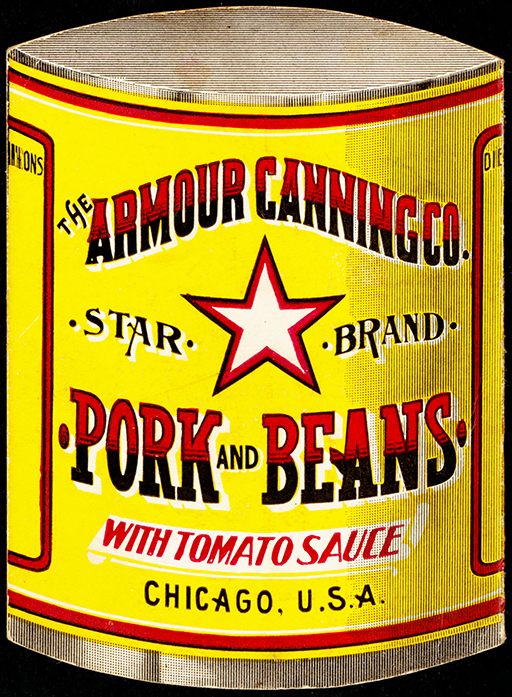
vintage ad for Armour Pork and Beans
Vintage ad for Armour Pork and Beans

The following recipe for pork and beans comes from Lydia Maria Francis Child’s 1841 cookbook The American Frugal Housewife: Dedicated to Those Who Are Not Ashamed of Economy. In this fascinating tome she offers the reader helpful advice and recipes for coping with privation. She cheerfully writes that “the true economy of housekeeping is simply the art of gathering up all the fragments, so that nothing be lost.” She goes on to stress that she means “fragments of time, as well as materials.” For Child, nothing should be thrown away, and all members of the family “should be employed either in earning or saving money.” Children can engage in patchwork or the braiding of straw hats and bonnets, she suggests. Above all, careful household accounts must be kept and the virtue of economy practiced at all times, for only then can one have “the permanent power of being useful and generous.”

Child’s book is indeed part cookbook, part instruction manual on household economy. She offers cures for various ailments (those who wish to preserve their health, she cautions, should never “drink strong green tea, eat pickles, preserves and rich pastry”) and hints on how to endure poverty (avoid “indolent and extravagant habits”).

The following recipe for pork and beans is a simple dish, enough to feed a large family on a cold winter’s night. Serve it with a hearty cornbread doused in fresh butter.

Frugal Pork and Beans

Baked beans are a very simple dish, yet few cook them well. They should be put in cold water and hung over fire the night before they are baked. In the morning they should be put in a colander and rinsed two or times; then again placed in a kettle with the pork you intend to bake, covered with water, and kept scalding hot, an hour or more. A pound of pork is quite enough for a quart of beans, and that is a large dinner for a common family. The rind of the pork should be slashed. Pieces of pork, alternately fat and lean, are the most suitable–cheeks are the best. A little pepper sprinkled among the beans when they are placed in the bean pot will render them less unhealthy. They should be just covered with water when put into the oven and the pork should sink a little below the surface of the beans. Bake for four hours.


Why Fast and Fermented Foods by Christine Baumgarthuber

Would you rather receive The Austerity Kitchen by email? Then sign up for my Substack.

And, if you’d like to help the Kitchen keep cookin’, please consider picking up copies of my books, Why Fast? and Fermented Foods.


More Wartime Cooking: English Stew with Barley and Baked Samp

FDA wartime propaganda poster

In her introduction to Two Hundred and Seventy-Five War-Time Recipes (1918), Carolyn Putnam Webber writes that the recipes in her book originally appeared “on the slips used at demonstration lectures,” but that she had assembled them for everyday use. She confesses that her recipes represent her belief that “true economy does not consist of going without but in making the most of what one has.” Expressing her conviction that frugal housekeepers in the United States represent a “volunteer army,” Webber adamantly stresses that their efforts can “help avoid rations or restricted diets and stabilize prices.”

Below are two recipes from Webber’s book. They can be served together, or as separate dinners. For the English stew, use whatever meat is most economical. And the samp for the baked samp recipe is not hard to find: Samp is the same thing as hominy, save that it is cracked into smaller pieces.

English Stew with Barley

1 lb mutton
4 potatoes sliced
2 tsp salt
2 onions
1/2 cup pearl barley
1 tsp chopped parsley

Cut meat in small pieces and brown with onions in fat from meat. Add barley and 2 quarts cold water. Simmer in covered dish 1 1/2 hours. Add potatoes and cook until potatoes are soft.

Baked Samp

2 c. boiled samp
1 tbsp. butter substitute
1/4 tsp paprika
1 cup grated cheese
1/2 cup milk
1 tsp salt
crumbs

Arrange samp, cheese and seasoning in alternate layers. Add milk, put crumbs on top, bake 20 minutes.


Why Fast and Fermented Foods by Christine Baumgarthuber

Would you rather receive The Austerity Kitchen by email? Then sign up for my Substack.

And, if you’d like to help the Kitchen keep cookin’, please consider picking up copies of my books, Why Fast? and Fermented Foods.

For the Long Christmas Fast: Kartofelny Gribnoy Sup

vintage Orthodox Christmas greeting card

Devout Orthodox Christians often fast more than 200 days throughout the year. From the Great Lenten Fast in spring to the Apostle’s and Dormition fasts during the warm months of summer, times of austere fare far outnumber those of decadence and plenty. During the long Christmas fast, which lasts from late November until January 7 (the Russian Orthodox Christmas), no meat, dairy or red-colored foods reminiscent of blood may be eaten: tomatoes, beets, red peppers and even carrots are forbidden. Fish is allowed only on Saturdays and Sundays.

Such dietary restrictions may seem daunting, but throughout the ages, clever Russian cooks have developed a varied–and delicious!–repertoire of dishes to enjoy during these prolonged fasts. Cabbages stuffed with flavorful vegetables, turnips covered in currents, crisp rice cutlets in mushroom sauce and savory pumpkin puddings are just a few of the dishes that grace the Russian table during the dark months of the Christmas fast. The Russians use different oils (hemp, nut, poppy seed and pumpkin being just of a few of their favorite oils) and herbs like nettles and sorrel to change the flavor of a particular vegetable dish. The combination of flavors is endless and the resulting meat- and dairy-free dishes are as complex and satisfying as their more decadent counterparts.

Here’s a traditional recipe for kartofelny gribnoy sup (mushroom soup with potatoes) from Culinaria: Russia. It’s a dish commonly served during the long Christmas fast. Serve it with a dense sour rye bread and a green salad (but no sour cream, please!).

Kartofelny Gribnoy Sup (Mushroom Soup with Potatoes)

9 oz/250 g fresh mushrooms (porcini, chanterelles, button) cut into bite-sized pieces
1 onion, finely chopped
1 carrot, finely chopped
2 tbsp. oil
1 lb 2 oz/500 g potatoes boiled in their skins, peeled and finely diced
1 tbsp finely chopped parsley
1 tbsp finely chopped dill
1 1/2 quarts/ 1.5 litres water or vegetable stock
Salt and pepper

Fry the mushrooms with the onion and carrot in the oil; add the potatoes and herbs; pour over the water or vegetable stock and leave the soup to simmer 10-15 minutes, stirring occasionally. Season to taste with salt and pepper.


Why Fast and Fermented Foods by Christine Baumgarthuber

Would you rather receive The Austerity Kitchen by email? Then sign up for my Substack.

And, if you’d like to help the Kitchen keep cookin’, please consider picking up copies of my books, Why Fast? and Fermented Foods.