Little-Tin Pound Cakes for Invalids

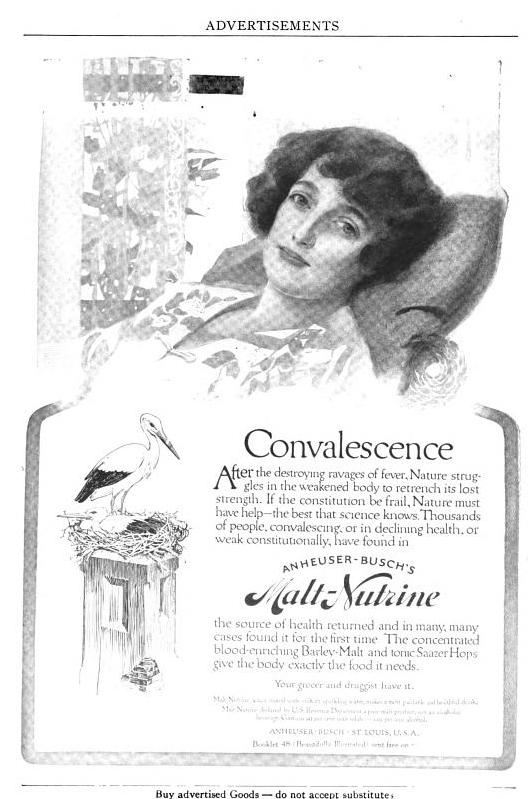
vintage ad for malt drink for convalescing patients

Mary Hedley Scudder champions the ill and infirm in her 1902 article “After Christmas — What?” These people, she insists, suffer the most from the dreary, uninteresting months following the holiday season.


“Somewhere there is an invalid whose days drag heavily, even though tenderness has guarded each hour,” Scudder writes, “and she has only Christmas memories.” Scudder recommends that her readership do more for such pitiable souls:

It may be you have only a few flowers, or a single rose, and it seems so small to give, but it may help a trying hour — who knows? One day there may be a dainty to send, a cup of soup, a pretty cake, baked as for a child in a ‘patty pan;’ something will always be ready if the invalid is in mind every day.


Scudder is of the opinion that tiny loaves of bread and tiny cakes bring the most delight to infirm young girls or women. “I know a woman who has a tiny bread tin, and a biscuit pan for just such cases,” she writes. “Why can you not do likewise?”

Why not, indeed? Here is a recipe for “pound cake for little tins” from a Boston Cooking School advertisement for baking tins found in the August–September, 1914 edition of American Cookery.

Pound Cake for Little Tins

1/3 cup butter
1/2 cup sugar
2 egg yolks
1/2 tablespoon brandy or milk
3/4 cup flour
1/2 teaspoonful baking powder (level)
1/4 teaspoon mace
2 egg whites

Put a little of the mixture in the center of each tin; the heat of the oven will cause it to run and fill the tins. [Make sure to use a cake tin that bakes about 12 little cakes.] The recipe makes about sixty little cakes. Spread confectioner’s icing on the top or leave plain.


Why Fast and Fermented Foods by Christine Baumgarthuber

Would you rather receive The Austerity Kitchen by email? Then sign up for my Substack.

And, if you’d like to help the Kitchen keep cookin’, please consider picking up copies of my books, Why Fast? and Fermented Foods.
Siberian Crab Apples

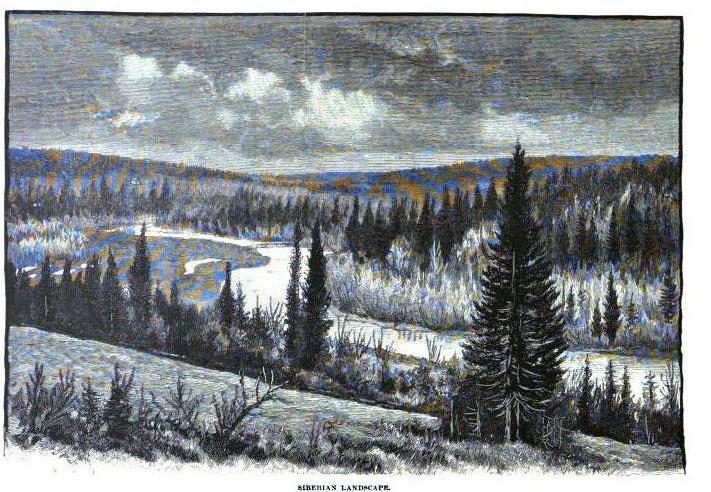
siberian landscape

George Kennan and his sled dogs traveled twenty-three days through the bleak, wintry wilderness of Siberia before they reached the tiny village of Anadyrsk. “The short winter day of three hours had long since closed and the night was far advanced,” he writes in his 1870 travel memoir Tent Life in Siberia and Adventures Among the Koraks and Other Tribes in Kamtchatka and Northern Asia, when “we drew near our final destination — the ultima Thule of Russian civilization.” Alerting Kennan to his imminent arrival was the sled dogs’ cheerful barking; he himself was lying listlessly and “nearly buried in heavy furs”on his sled, exhausted from weeks spent wandering the snow-blown steppes.

A crowd of spectators gathered around the weary American adventurer, whose hungry face sporting a beard of three-weeks’ growth and a frost-bitten forehead covered in “long ragged locks” provoked in them a respectful silence. In the center of this “fur-clad group” stood a priest with “long flowing hair and beard, dressed in a voluminous black robe, and holding above his head a long tallow candle which flared wildly in the cold night air.” The priest beckoned Kennan to follow him.

Kennan followed the priest into a small, tidy house. Its floors were carpeted in “soft, dark deer-skins in which one’s feet sank deeply at every step.” A fire blazed in one corner, and a “tiny gilt taper was lighted before a massive gilt shrine opposite the door.” On a small table was laid a meal of vodka, “cabbage-soup, fried cutlets, white bread and butter,” which Kennan shared with the priest and his family.

After this welcome repast Kennan spread out his bedclothes on the floor, undressed himself “for the second time in three weeks,” and retired. “The sensation of sleeping without furs, and with uncovered head,” he writes, “was so strange, that for a long time [I laid] awake, watching the red flickering fire-light on the wall, and enjoying the delicious warmth of soft, fleecy blankets, and the luxury of unconfined limbs and bare feet.”

What dessert Kennan enjoyed during that first meal after three weeks in the wilderness he did not record. Perhaps it was a dish of sweet Siberian crab apples like this one from the 1866 Dictionary of Daily Wants.

Stewed Siberian Crabs

Make a rich syrup with sugar, the juice and rind of lemons, a little brandy, and cloves. When this boils throw in the fruit [crab apples], which should be perfectly ripe. Let it simmer for a few minutes, then remove from the fire; and leave it to cool. Boil again, and continue doing so until the crabs become quite soft. Serve cool in the syrup.

Pickled Siberian Crabs

Gather the apples while they are still very hard. Remove the eyes, peel them, and put them into a brine of salt and water that will float an egg. Let them stand for six days more. Put them into a jar with a little mace. Boil some double distilled vinegar with sliced horseradish, a sliced nutmeg, some allspice, and a few cloves, and pour it boiling hot upon the apples. When quite cold put a cork into the jar. Boil the vinegar again every alternate day for ten days, and pour it each time boiling hot over the apples. When cold, cork the jar, and tie it down with a bladder. The pickle will not attain perfection till it has lain for three months.


Why Fast and Fermented Foods by Christine Baumgarthuber

Would you rather receive The Austerity Kitchen by email? Then sign up for my Substack.

And, if you’d like to help the Kitchen keep cookin’, please consider picking up copies of my books, Why Fast? and Fermented Foods.

Gurr Cake

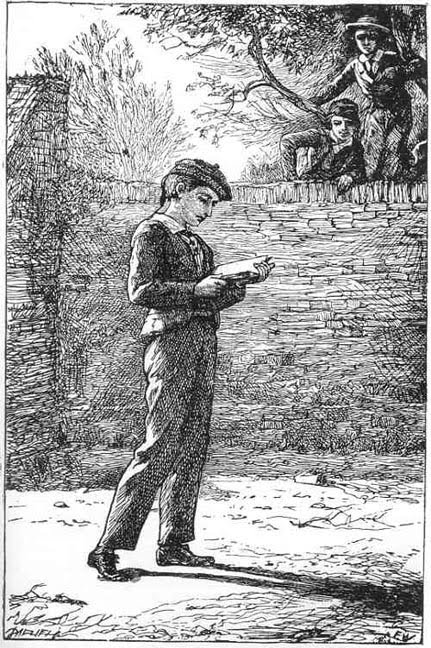
Irish schoolboy, illustration

A clever and economical innovation of Dublin bakers during the nineteenth century, gurr cake was a favorite after-school treat for many a young pupil “on the gurr,” or playing hooky. This illicit sweet was comprised of stale bread (on luckier days, day-old cake replaced the bread) which was mixed with sugar and dried fruit. The mixture of bread and fruit was then stacked between layers of dough and the entire concoction sprinkled with powdered sugar.

Because of its cheapness, gurr cake became synonymous with street urchins and was used to describe the hardened runaways who subsisted on it. But you need not be dodging school in order to enjoy a piece of this delightfully frugal cake. Below is a recipe from Culinaria: European Specialties for a slightly richer version of gurr cake. Enjoy it with tea, coffee or a glass of warm, rum-infused milk.

Gurr Cake

8 slices of stale bread without crusts
3 Tbs flour
1/2 tsp baking powder
2 tsp bread seasoning
1/2 cup (100 g) brown sugar
2 Tbs butter
6 oz (175 g) currants or dried mixed fruit
1 beaten egg
4 Tbs milk
8 oz (250 g) short pastry
Caster sugar

Soak the bread for 60 minutes in water, then squeeze dry. Mix with the flour, baking powder, seasoning, sugar, butter, currants, egg and milk. Stir the ingredients thoroughly.
Line a baking pan approximately 8 inches (22 cm) square with half the pastry, place the bread mixture in the pan, distribute evenly and cover with the remaining pastry. Score through several times.
Bake for about 60 minutes at 375 degrees F. (190 degrees C.) in the oven. Sprinkle with sugar and leave to cool in the baking pan. Then cut the cake into 24 small square pieces (such a piece in the last century cost a half penny).


Why Fast and Fermented Foods by Christine Baumgarthuber

Would you rather receive The Austerity Kitchen by email? Then sign up for my Substack.

And, if you’d like to help the Kitchen keep cookin’, please consider picking up copies of my books, Why Fast? and Fermented Foods.