From Transylvania: Mămăligă

H. Ellen Browning, distant relative of English poet Robert Browning, chronicles her adventures in Eastern Europe in her travel memoir A Girl’s Wanderings in Hungary (1897). Though she claims to “belong to the category of ‘mouse-screeching’ women,” she finds stolidity enough to develop a deep love for “the sea, and the mountains, and the frank ‘natural-ness’ of the peasantry” during her travels (“garlic and drunken men” both disgust her, however). Of the countries she visits, it is Transylvania’s dramatic scenery that wins her heart, and she passes most of her time wandering its vast forests and marveling at the small, humble villages she finds along the way.

During her walks, Browning enjoys only those foods eaten by the region’s peasantry and herdsman. She prepares these simple dishes — “brigand’s beefsteak,” roasted potatoes, omelets and onion soup — with a forester’s help, cooking them over hot ash in iron pots.
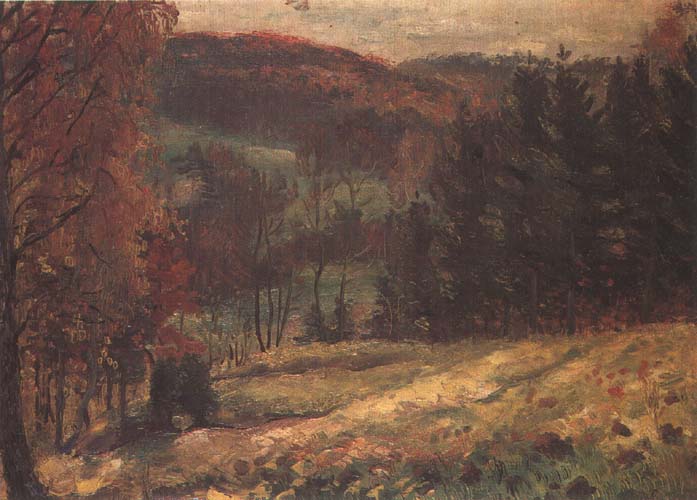
Fryderyk Pautsch, Autumn in the Carpathian Mountains, 1936

A dish particularly loved by Browning is a corn pudding called mămăligă, which is cooked in a gigantic cast iron cauldron over an open fire. According to legend, if the mămăligă cracks while cooking, a member of the household is destined for an unexpected journey. The dish was quite popular with nineteenth-century kitcheners, and even merited mention in a best-selling novel: while traveling through the Carpathian Mountains, Jonathan Harker of Bram Stoker’s Dracula (1897) enjoys a dish of mămăligă before departing for Dracula’s castle.

Harker unfortunately neglects to jot down the recipe for this toothsome dish. But Katharina Prato’s Die Süddeutsche Küche ( 1903) offers a recipe that doesn’t skimp on authenticity.

Mămăligă

In one liter of warm water mix one and a half liter Italian cornmeal. Add salt to taste, cover (but allow for some steam to escape), and let boil for ten minutes until most of the water has been absorbed. Mixes the entire mass until thick and let stand fifteen minutes over low heat. Then transfer half the polenta mixture to a baking dish greased heavily with butter. Sprinkle sheep’s cheese over the polenta and spread another layer of polenta over the cheese. Continue this process until the baking dish is full. Sprinkle butter over the top and back in a moderate oven until the mămăligă forms a brown crust.


Why Fast and Fermented Foods by Christine Baumgarthuber

Would you rather receive The Austerity Kitchen by email? Then sign up for my Substack.

And, if you’d like to help the Kitchen keep cookin’, please consider picking up copies of my books, Why Fast? and Fermented Foods.
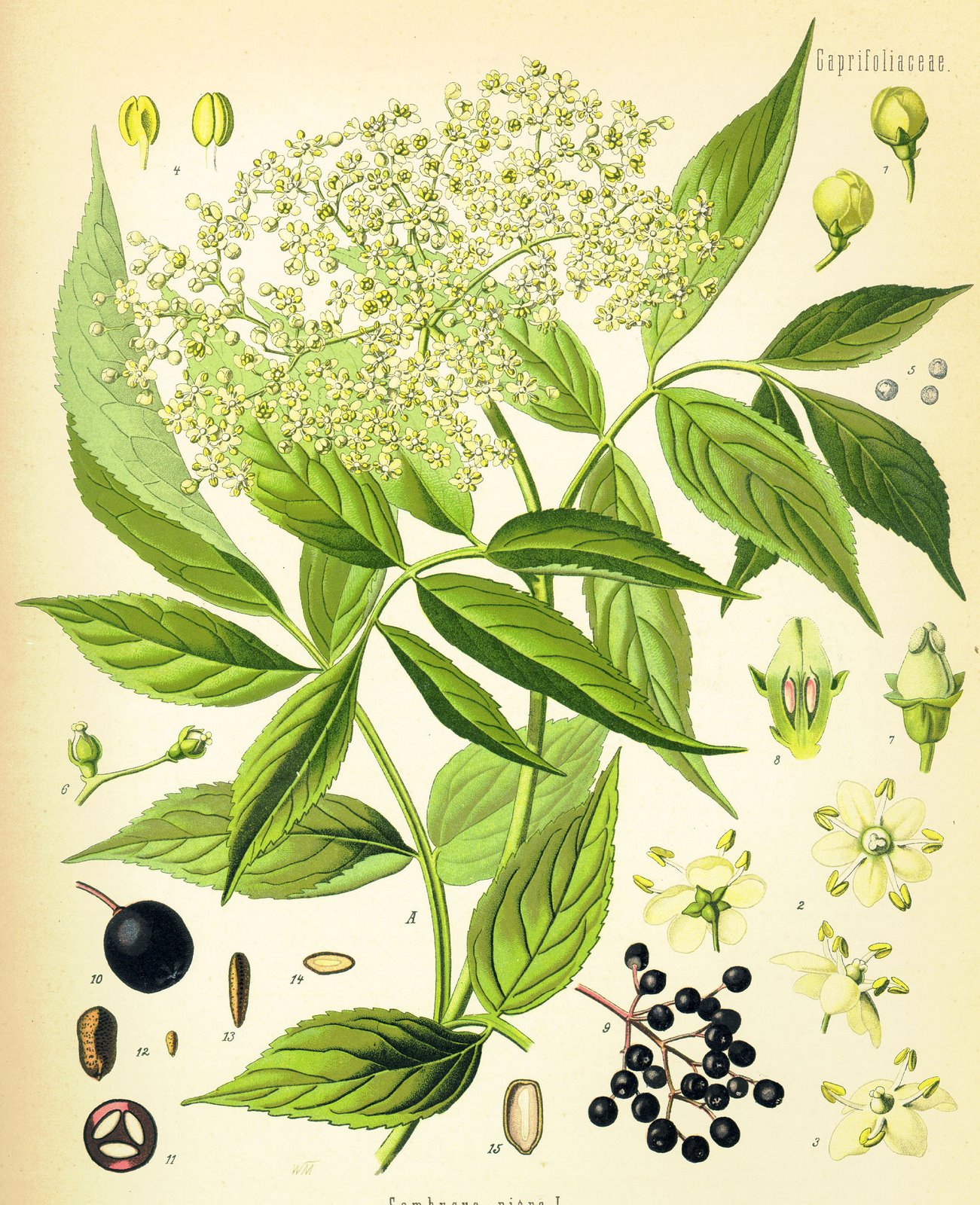
Fried Elderberry Blossoms

Springtime forests abound with culinary delights and elderberry blossoms are one of them. The fragrant cream-colored blossoms of the common elderberry tree appear toward the end of May, turning to small purple berries by late June. Poisonous in their unripe state, the mature berries are used to make wine, brandy, jellies, chutneys and pies. The flowers are popular in teas and cordials, because their balmy flavor lends itself to sweetened beverages. Both the berries and flowers contain an abundance of antioxidants and other beneficial properties.

elderflower and elderberries schematic illustrationElderberry flowers and berries


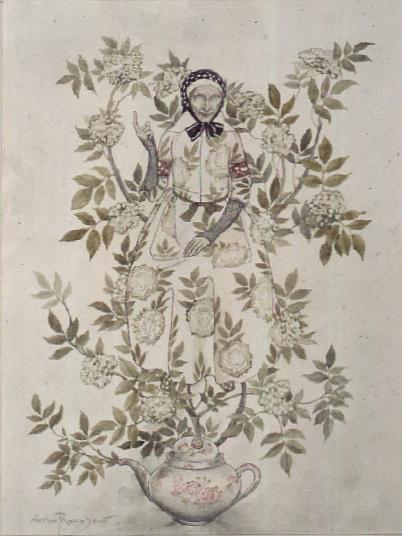
The 1888 Family Living on $500 a Year: A Daily Reference-Book for Young and Inexperienced Housewives suggests using elderberries, along with sugar and allspice, to make a spicy ketchup. But the elderberry also has associations and uses far more mystical: In England and Scotland, the elderberry tree was thought to possess narcotic properties, and to sleep beneath the shade of its leaves was to court certain danger. Amulets made from the tree’s leaves and bark were used as evil charms. But the elderberry didn’t just lend itself to purposes malign; Hans Christian Andersen’s story “The Elder-Tree Mother” (1845) tells of the elderberry’s ability to ward off evil magic and summon benevolent spirits. And the Tsimshians of British Columbia believed the elderberry bush helped summon mankind itself into existence by coupling with the Raven-god.

Elder-Tree MotherThe Elder-Tree Mother


Here’s a German recipe for fried elderberry blossoms. It’s a simple dish that costs next to nothing. Serve it as a dessert or an afternoon snack.

Fried Elderberry Blossoms

8 elderberry blossoms, with the stems still attached
9 ounces flour
8.5 ounces milk
2 tablespoons rum
1 pinch salt
2 teaspoons honey
1 egg
oil for frying
1 teaspoon cinnamon
3 teaspoons sugar

Lay the elderberry blossoms in a dish with water and gently swirl the water around the blossoms. Lay them on a dishtowel to dry. Mix the flour, milk, rum, salt, honey and egg into a thin batter. Let stand 30 minutes. Heat the oil in a large pan to 356 degrees F. Test the heated oil with a spoonful of batter — it should quickly become a light brown. Dip the blossoms in the batter and fry in the oil until golden brown. Then lay them on a plate covered in a paper towel to absorb the excess oil. Mix the cinnamon and sugar and sprinkle over the fried blossoms (you can also use powdered sugar). Serve immediately.


Why Fast and Fermented Foods by Christine Baumgarthuber

Would you rather receive The Austerity Kitchen by email? Then sign up for my Substack.

And, if you’d like to help the Kitchen keep cookin’, please consider picking up copies of my books, Why Fast? and Fermented Foods.

Schutzhaus Fare: Wild Mushroom Stew

Schutzhaus in the Tyrol Austria

The weary traveler wanders through the green valleys and steep passes of Tyrol. She finds she can walk no further; her hunger prohibits her from taking another step. Luckily a humble Shutzhaus, a haven for hikers, appears through the pines, offering shelter and hearty sustenance to succor body and spirit.

Schutzhaus fare is simple yet wholesome, intended to satisfy the often ravenous appetites of those who have been wandering, sometimes for hours on end, the mountain passes of Austria. The 1905 Manöver-Küche cookbook provides a fascinating array of simple recipes to satisfy those appetites. It also offers the Shutzhaus proprietor valuable information on how to best store and use provisions and cooking utensils under less than ideal conditions. Meat must be carefully selected, the silverware thoroughly washed, and only the finest oil and coffee purchased lest it grow rancid or stale after months of storage.

Because these tiny cottages are usually located in areas that cannot be accessed by roads, the meals served are simple affairs, made from ingredients that do not require refrigeration. Here is a recipe from Manöver-Küche for wild mushroom stew, a meal where most of the ingredients come straight from the forest.

Wild Mushroom Stew

1 pound mushrooms, wild or store-bought
2 tablespoons butter
1 onion, chopped
1/2 bunch parsley
1/2 cup chicken or vegetable stock
1/4 cup flour
Salt and pepper to taste
2 tablespoons sour cream

Clean the mushrooms and cut them into slices. Place them in a baking dish. Cut up butter and place on top of mushrooms. Add onion and sprinkle flour over the mixture. Pour in stock and sprinkle parsley and salt and pepper over the mushrooms. Cook in a medium oven for 1/2 hour, or until mushrooms are tender. Take out of oven and stir in sour cream. Serve immediately. This dish can also be prepared on the stove.


Why Fast and Fermented Foods by Christine Baumgarthuber

Would you rather receive The Austerity Kitchen by email? Then sign up for my Substack.

And, if you’d like to help the Kitchen keep cookin’, please consider picking up copies of my books, Why Fast? and Fermented Foods.