Pease Pudding Hot

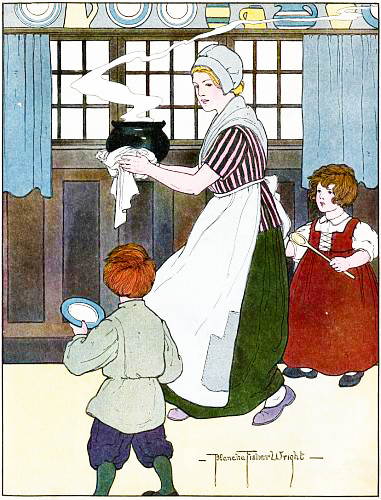
Illustration of woman serving pease porridge

“Pease pudding hot, Pease pudding cold,
Pease pudding in the pot — nine days old.
Some like it hot, some like it cold,
Some like it in the pot, nine days old.”

While the origins of “Pease Pudding Hot” are unknown, the dish described in the rhyme is a thick, smooth paste made from dried peas or lentils. Traditionally served with boiled bacon or a type of sausage called a saveloy, it appeared frequently on the tables of the lower classes, where, more often than was desired, it sat in a pot for nine days (or more), heated and then reheated until finished off.

Was nine-day-old pease pudding palatable, you ask? The July 24, 1884 edition of Knowledge, An Illustrated Magazine of Science reports that aged pease pudding was, in fact, a great treat. It mentions a reader who “has seven dishes of [pease pudding] in his larder, corresponding to the days of the week [and] each being seven days old.” The brave reader claims old pease pudding is easier to digest than new. The editor of Knowledge, however, warns the nursery rhyme offers sage advice: Nine days is the limit pease pudding can be kept in a larder before it’s likely to make the unwary diner ill.

The following recipe for pease pudding comes from Maria Eliza Ketelby Rundell’s The New Family Receipt-Book (1810). Serve pease pudding with boiled pork or, if you are vegetarian, by itself. Do not, however, keep your pease pudding for more than a day or two without refrigeration.

Pease Pudding Hot

Take a pint of yellow split pease, and after tying them loosely in a cloth, boil them in water until they become tender. Then rub them through a cullender [colander] or hair sieve [sieve], and add to the pulp a bit of butter, a spoonful of cream, two eggs, and white pepper and salt. After being uniformly mixed, put the pease into a cloth; tie tightly, and boil for the space of half an hour, to make the ingredients set.


Why Fast and Fermented Foods by Christine Baumgarthuber

Would you rather receive The Austerity Kitchen by email? Then sign up for my Substack.

And, if you’d like to help the Kitchen keep cookin’, please consider picking up copies of my books, Why Fast? and Fermented Foods.
Tasty Prussian Rations: Erbswurst

When the Franco-Prussian War broke out in 1870, Prussia struggled to feed its soldiers. Previously, it served them pea soup and bread. But soup is messy, and bread quickly becomes moldy. The Prussian army needed rations that were tasty, satisfying and convenient.

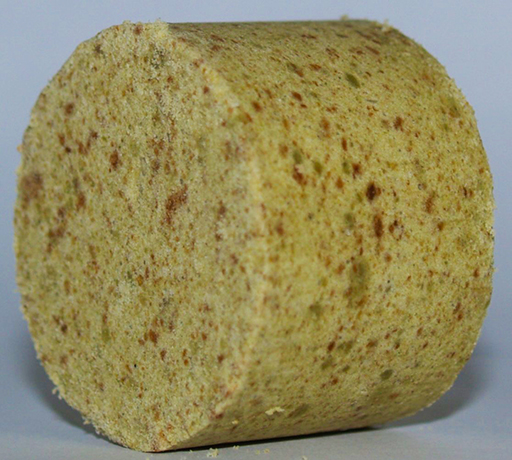
The Prussian state turned to Heinrich Grueneberg for a solution. In 1867 Grueneberg invented the “Erbswurst,” a sausage made from dried bacon and pea flour that could be quickly rehydrated in a mess tin. The Erbswurst proved the perfect food for the Prussian army, as it was tasty and keep well under the worst conditions. The Prussians built a large factory, which employed 1200 people, for making the sausage. The Erbswurst factory produced 5,000 tons of “sausage” during the war.

Perhaps the Erbswurst helped the Prussians defeat the French. It certainly proved popular: In 1899, Knorr purchased the license for the recipe. It continues the production of the Erbswurst to the present day.

Image via Wikimedia Commons

Finding Erbswurst in the United States might be a challenge. But you can approximate the taste by making a hearty split pea soup. Here’s a fantastic recipe from Saveur, via The Bitten Word:

German Split Pea Soup (Erbsensuppe)

2 tbsp. extra-virgin olive oil
2 slices bacon, finely chopped
1 large onion, finely chopped
1 rib celery, finely chopped
1 large carrot, peeled and finely chopped
1 small celery root, peeled and finely chopped
Kosher salt, to taste
2 tbsp. flour
10 sprigs flat-leaf parsley
8 sprigs fresh thyme
2 bay leaves
1 lb. green split peas, rinsed and drained
2 large smoked ham hocks (about 2 lbs. total)
Fresh black pepper, to taste

Directions:

Place oil and bacon in a 6-qt. pot and cook over medium-high heat until crisp, about 6 minutes. Transfer bacon to paper towel with a slotted spoon; set aside. Add onions, celery, carrots, and celery root, season with salt, and cook, stirring occasionally, until soft, about 10 minutes. Stir in flour; cook for 3 minutes.

Tie parsley, thyme, and bay leaves together with kitchen twine; add to pot with peas, ham hocks, and 7 cups water. Bring to a boil over high heat. Reduce heat and simmer, covered, until peas are very tender, about 1 hour. Remove from heat. Discard herbs. Transfer hocks to a plate to let cool; pull off and chop the meat; discard fat, skin, and bones. Stir meat into soup, season with salt and pepper, and ladle soup into bowls. Sprinkle with reserved bacon and ground pepper.

Serve with a sour rye bread and butter.


Why Fast and Fermented Foods by Christine Baumgarthuber

Would you rather receive The Austerity Kitchen by email? Then sign up for my Substack.

And, if you’d like to help the Kitchen keep cookin’, please consider picking up copies of my books, Why Fast? and Fermented Foods.