Watercress: A Victorian Superfood

Watercress vendor in 19th-century CornwallAt the mention of watercress, we often think of afternoon tea parties and anemic sandwiches with their crusts neatly removed.

But watercress was a favorite of the Victorian working classes, who valued its spicy, tangy flavor and relative cheapness — watercress sold for a few pence a bundle, a price well within the budget of even the poorest laborer. They paired it with plain, black bread for lunch and sometimes, when times were tougher than usual, dinner. For laborers living under the worst conditions, the black bread and watercress sandwich was the only food available.


The Victorian working classes actually benefitted from their watercress-based diets. A recent article in the Journal of the Royal Society of Medicine concluded that watercress, which is packed full of vitamins and minerals, contributed to the surprisingly good health of early-Victorian laborers.

Luckily watercress could be found on almost any street corner in larger cities like London. Watercress sellers would stand with their wooden carts and baskets from sunrise to sunset, tempting every man and women who passed with mountains of glistening watercress, which they sold in paper-wrapped bunches. Customers would frequently eat their watercress right out of the paper wrappers, enjoying the plant as one would enjoy an ice-cream cone.


Watercress is available in most supermarkets for about $0.70 a bunch. The Austerity Kitchen does not recommend you eat your watercress plain, however. Instead, try it in salads and soups. Its peppery flavor goes well with many savory dishes. Here’s a delightful recipe from watercress.co.uk, a website devoted to promoting the cause of watercress:


Watercress Omelette with Mushroom and Stilton

0.5 ounces butter
2.5 ounces mushrooms
3 eggs
1 ounce Stilton, or cheese of your choice
1.5 ounces watercress

Melt the butter in a non-stick frying pan. Add the sliced mushrooms and cook over a high heat until golden brown. Remove from the pan with a slotted spoon. Stir a handful of chopped watercress into the beaten eggs and season with salt and pepper. Pour the eggs into the hot pan and tilt the pan to cover the base with the mixture.

Reduce heat to moderate and cook until the omelet is just set and the underside is golden brown. Scatter the mushrooms and Stilton over the top. Slide the omelette on to the plate and fold in half. Garnish with extra watercress and serve immediately.

If you want to save a few dollars, substitute Feta cheese for Stilton. Serve this omelette with a green salad and, of course, black bread!


Why Fast and Fermented Foods by Christine Baumgarthuber

Would you rather receive The Austerity Kitchen by email? Then sign up for my Substack.

And, if you’d like to help the Kitchen keep cookin’, please consider picking up copies of my books, Why Fast? and Fermented Foods.
The Austerity Kitchen Challenge: Frugal Fruit Salad

Produce is expensive. While shopping the other day, I noticed grapes were $2.50 a pound, and peaches $3.00. Not fare for an austere diet, for sure.

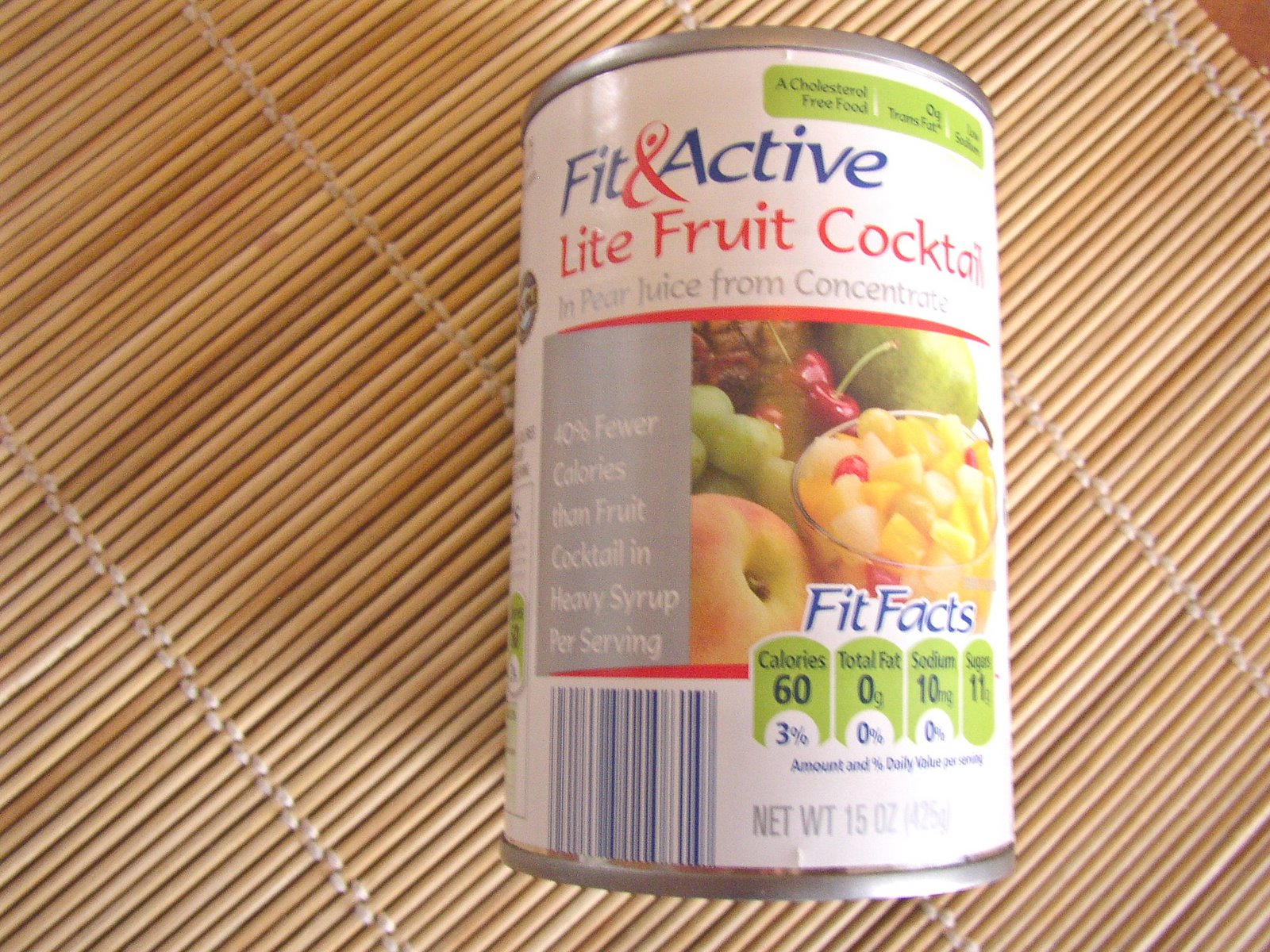
So I decided to develop a “frugal” fruit salad for this month’s Austerity Kitchen Challenge. Frugal Fruit Salad depends on canned fruit cocktail as a base. This shaves a couple dollars off the overall price of the salad as a 15-ounce (125 grams) can of fruit cocktail retails for about $0.85. I prefer Aldi’s Fit&Active light fruit cocktail. Aldi packs their fruit in pear juice rather than syrup, which lends a nice freshness to the fruit. But you can substitute any brand of canned fruit cocktail packed in juice.


The foundation of fruity frugality


With canned fruit cocktail as a base, you need only add one or two fresh fruits to impart an added toothsomeness to your salad. And you can easily control the amount of fruit salad you make — no need to use up an entire pineapple, or a dozen peaches before they rot.

Frugal Fruit Salad sets you back about $1.10, depending on the fresh fruit you use in the salad.


Frugal Fruit Salad

(Serves Four)

1 15-ounce can fruit salad packed in juice
1 grapefruit, or 2 oranges
1 banana
1-2 tsp sugar, or sweetener of your choice
cinnamon to taste

Placed canned fruit salad in a serving bowl. Cut up the fresh fruit into small chunks. Add to the canned fruit salad. Sprinkle sugar and cinnamon over the salad. Refrigerate for two hours before serving.

Steerage Soup: Third-Class Dining on the Titanic

The Titanic set sail from Southampton on April 10, 1912 with a treasure trove of culinary delights.

 
The ship carried in its hold a few hundred tons of foodstuffs for the voyage, including 2,500 pounds of sausage, 36,000 oranges, 1,500 gallons of milk, 40,000 eggs, 1,000 bottles of wine and 800 bundles of fresh asparagus.
 
But while the Astors and Guggenheims sipped champagne and crunched asparagus in first class, the passengers in steerage dined on more austere fare. A typical dinner menu in steerage included rice soup, corned beef and biscuits. Fresh fruit served as a dessert.


Coming from countries like Norway and Ireland, where fresh fruit and vegetables were scare, the Titanic’s third-class passengers found their menu almost luxurious. In fact the Titanic’s kitchen staff did do their best to provide meals that the passengers would find comforting and nutritious.

Here’s a recipe for rice soup, much like the one enjoyed by the Titanic’s third-class passengers. It’s a simple dish, but tasty:

Cream of Rice Soup

2 qts chicken stock
1 cup rice
1 qt cream or milk
1 small onion
1 stalk of celery
Salt and pepper to taste
Fresh herbs (optional)

Lightly brown the onions and celery. Add chicken stock.

Wash rice carefully, and add to chicken stock, onion and celery. Simmer slowly for two hours.

Put soup through a sieve; add seasoning and the milk or cream. Bring the soup to a simmer again, and simmer for five minutes. Add fresh herbs to taste.

Serve this soup with biscuits, like the Titanic’s kitchen staff did, or a green salad.


Why Fast and Fermented Foods by Christine Baumgarthuber

Would you rather receive The Austerity Kitchen by email? Then sign up for my Substack.

And, if you’d like to help the Kitchen keep cookin’, please consider picking up copies of my books, Why Fast? and Fermented Foods.