
From Alaska: Sourdough Pancakes

Alaskan Purchase of 1867

In Alaska one could find frontier cooking at its best. Rugged prospectors combined their culinary skills with those of the native Eskimos, whipping up hearty dishes of game, fish, wild plants and sourdough breads. The typical dinner of an Alaskan prospector featured such exotic delicacies as caribou, moose, rabbit and bear. Sometimes, when the fishing was good, the dinner table was graced with king crab or ruby red salmon and rainbow trout. For dessert prospectors and frontiersmen enjoyed blueberry pies and huckleberry preserves — nutritious gifts harvested from deep within the Alaskan forests.

But baked goods made from sourdough were perhaps the most treasured treats of the prospector, who guarded his bubbling pot of sourdough starter with the utmost caution. According to Mary Kellogg Sullivan, in her book The Trail of a Sourdough: Life in Alaska (1910), the term “sourdough” referred to “a miner who has spent one winter in Alaska and ‘has seen the ice go out.'” This picturesque way of describing a hardened and experienced miner’s life suggested that he lived entirely beyond the pale of civilization, so much so that he was forced to rely on bread made from fermented potatoes and flour — Alaskan sourdough.

Sourdough by Fred MachetanzFred Machetanz, Sourdough (ca. 1930)

Here’s a recipe for sourdough pancakes from sourdoughbreads.com. You can purchase an authentic Alaskan (from a Yukon prospector, at that!) sourdough starter from sourdo.com. Serve your pancakes with a blueberry conserve or maple syrup.

Sourdough Pancakes


The night before, mix well (to incorporate some air) 1 cup of sourdough starter with 1½ cups of all purpose flour and 1 cup of warm water (85°-90°). Leave at warm room temperature (70°-85°) overnight, covered well with plastic wrap.

The next morning, return 1 cup of the starter mixture to the fridge.

Then mix the remaining 1½ cups of starter with

1 egg, slightly beaten
1 Tablespoon of sugar (or more if you like)
1 Tablespoon of melted butter
¾ Teaspoon of salt
½ teaspoon (generous) of baking soda
2 Tablespoons of milk

Try to have your ingredients at room temperature. This will help to make more tender pancakes.

Bake on a 400° griddle. Enjoy!


Why Fast and Fermented Foods by Christine Baumgarthuber

Would you rather receive The Austerity Kitchen by email? Then sign up for my Substack.

And, if you’d like to help the Kitchen keep cookin’, please consider picking up copies of my books, Why Fast? and Fermented Foods.

Pretzels: A Lenten Treat

Jan van Bijlert, Pulling of the Pretzel (ca. 1630)

Fashioned to look like a pair of arms crossed over a chest, the pretzel has long been a staple in the Central European household. The tasty treat was first introduced in the seventh century by Italian monks as a reward for children who dutifully learned their prayers. Later on, pretzels were used in the bakery emblems of baker’s guilds in Southern Germany, and by the seventeenth century the pretzel was a frequent fixture on the German Good Friday dinner table. These Lenten pretzels were made with only flour and water as eggs, lard or dairy products were strictly forbidden.

Here’s a recipe for soft pretzels much like the ones enjoyed during Lent from germanculture.com. Serve them with mustard and a nice, unfiltered beer. Or slice them open and fill with cheese for a tasty sandwich.

German Pretzels

1 package active dry yeast
4 cup flour, unbleached
1 1/2 cup warm water
1 egg
1 tsp coarse salt
1 tbsp sugar

Dissolve yeast in warm water. Add salt and sugar to yeast mixture. Blend in flour and knead dough until smooth, about 7 to 8 minutes. Cover and let dough rise until double in bulk. Punch down. Cut dough into small pieces and roll into ropes. Twist ropes into pretzel shapes and place on greased cookie sheet. Using a pastry brush, brush pretzels with slightly beaten egg and sprinkle with coarse salt. Allow pretzels to rise until almost double in bulk. Bake at 425 degrees F. for 10 to 15 minutes or until browned. Best if eaten immediately. If not, store in airtight container. Makes 12 pretzels.


Why Fast and Fermented Foods by Christine Baumgarthuber

Would you rather receive The Austerity Kitchen by email? Then sign up for my Substack.

And, if you’d like to help the Kitchen keep cookin’, please consider picking up copies of my books, Why Fast? and Fermented Foods.

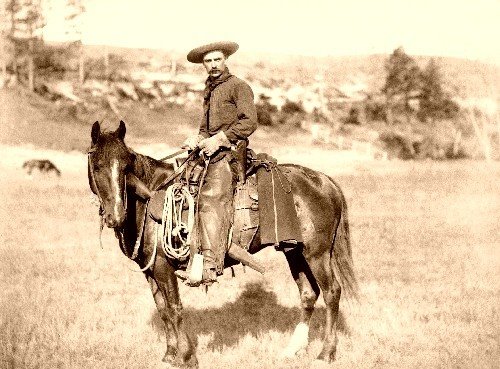
Cowboy Cooking: Fried Soda Biscuits

cowboy on his horse

A 1902 edition of the once popular magazine Recreation presents a charming article on the finer points of cowboy cooking. “A Mexican, with a grimy sack of flour, a little water, a little baking powder and a fire of sage brush, can in a few minutes prepare most excellent biscuits,” the article claims.

And just how are these most excellent biscuits prepared? “With the simplest kind of cooking outfit,” the article continues. The clever Mexican cowboy just “unfastened that dingy sack of flour from his saddle, placed it squarely upright on the sod [and then] scooped out a hollow in the flour and poured in some water.” This mixture was the basis of his biscuits, which the cowboy cooked in bacon fat in a cast-iron skillet in front of his camp fire until “he had a panful of beautiful biscuits, white within a browned to a turn on top.”

These hearty cowboy biscuits were a staple on the high and lonely plains, where a taxing life was rewarded with good, wholesome food. The cooking outfit of the typical camp “round up” was simple, but the cook was paid handsomely for his talents — about $40.00 a month as wages. These wages were indeed well earned: the cowboy cook had to work his culinary magic with austere provisions — canned vegetables, dried fruit and beef — and under the pressure of daily changes of camp location. Even in the worst weather, the cook had to tumble out of bed at three in the morning and begin preparing the day’s meals.

Recreation provides us with a fascinating glimpse into the early morning activities of the cowboy camp:

The cook turns out about 3 o’ clock in the morning. No matter what the weather may be it must be done. In wind storm or rain storm breakfast must be served. About 4 o’ clock he wakes the remainder of the crew. The sleepy cowboys turn out reluctantly because their sleep was sweet and their bodies tired from much hard riding. They souse their faces in buckets of cold water. If there is a spring or creek near they prefer to perform their ablutions there. Then they saddle their broncos, after which there is a call to breakfast. Each cowboy is supplied with a knife, fork, spoon and a large tin plate. Of course there is a good sized cup of coffee, for that grateful beverage is drunk in unlimited quantities in the cow camp.He has a plate or 2 for side dishes. Then each cowboy marches up to the campfire where there is a smoking row of pots and kettles and helps himself to what he wants. He retires and allows another to take his turn. After supplying themselves they all sit a short distance from the fire in a picturesque group on the ground and partake of their morning meal. That is the only regular meal of the day as they come in from the range at all hours until sometimes late in the evening. The cook replenishes his pots and kettles and as the cheap restaurant man says gives meals at all hours.

Here is a recipe for fried soda biscuits from The Heritage Cook Book. The cowboy cook would pinch off pieces of dough the size of an egg, instead of bothering with a biscuit cutter, which he thought superfluous. He would shape the dough into flat rounds and then fry them in oil in a Dutch oven. Serve these biscuits with chili at dinnertime or with honey and jam for a filling breakfast.

Fried Soda Biscuits

2 cups all purpose flour
1 teaspoon baking soda
1/2 teaspoon salt
1/4 cup shortening
3/4 cup buttermilk or sour milk
Shortening

Stir together flour, soda, and salt. Cut in 1/4 cup shortening till the mixture resembles coarse crumbs. Make a well in the dry mixture; add buttermilk or sour milk all at once. Stir just till the dough clings together. Knead gently on a lightly floured surface 10 to 12 strokes. Melt enough shortening in the deep skillet to give a depth of 1 inch. Heat to 375 degrees F. To shape each biscuit, cut off about 1 tablespoon of the dough and form into a ball about 1 inch in diameter; flatten slightly. Carefully place biscuits, a few at a time, in the hot shortening. Fry till golden, turning once, about 2 minutes per side. Drain on paper toweling. Serve hot. Makes 24 biscuits.


Why Fast and Fermented Foods by Christine Baumgarthuber

Would you rather receive The Austerity Kitchen by email? Then sign up for my Substack.

And, if you’d like to help the Kitchen keep cookin’, please consider picking up copies of my books, Why Fast? and Fermented Foods.