The Versatile Knoedel

Southern German town

The dumpling, or knoedel, has long been a staple food in southern Germany. Caspar von Schmid of Schwandorf, an important personage in the court of Munich in the 17th century, wrote that “the people of Bavaria should be spared banishment from the country wherever possible, because then they would be deprived of dumplings.” And Lena Christ, writing during the first decade of the 20th century, fondly remembers the ever-present knoedel of her grandparent’s dinner table: “Even at other times, [Grandfather] was often to be found in the kitchen, helping Grandmother peel turnips or cut up white rolls for our dumplings, which had to be served every day. There were dumplings even on Sundays, although much larger and darker, in the form of liver dumplings–which were not only tasty but cheap–it was brought to the table too, in a large, patterned dish […] We ate meat only on very special occasions. Even on Sundays my grandparents were content with liver dumplings, eaten with the Tauch, a vegetable dish made of root vegetables or kohlrabi. Only Grandfather had a piece of boiled beef fat with his Sunday dinner, and he ate it salted and peppered, with a slice of bread.”

These simple dumplings have earned their reputation as a prudent treat as they are both economical and versatile. Try them with a sweet filling of apricots or plum jam, or serve them with a hearty goulash. The following recipe from the Austrian cookbook Nur Knoedel is for liver dumplings very much like those beloved by Lena Christ (they were also one of Mozart’s favorite dishes!). Serve them in a soup or with a savory sauerkraut.

Leberknoedel (Liver Dumplings)

9 oz. beef liver
3 stale rolls
1/2 pint milk
3.5 oz. butter
1 small onion
1 egg
salt, pepper
marjoram, parsley
3.5 oz. bread crumbs

Pour milk over the rolls and work it in. Chop the onion and sauté it in butter. Mix the rolls, finely chopped liver and spices together. Make into a dough. Form the dumplings and boil them for 15 minutes in salted water. You can also fry them in hot vegetable oil. Best served hot in a beef broth. Liver dumplings can also be served as a main dish with sauerkraut.


Why Fast and Fermented Foods by Christine Baumgarthuber

Would you rather receive The Austerity Kitchen by email? Then sign up for my Substack.

And, if you’d like to help the Kitchen keep cookin’, please consider picking up copies of my books, Why Fast? and Fermented Foods.
From the Frugal American Housewife: Pork and Beans

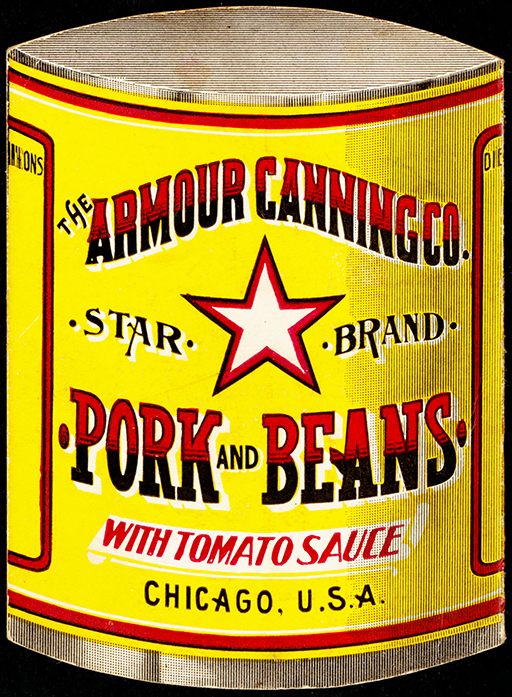
vintage ad for Armour Pork and Beans
Vintage ad for Armour Pork and Beans

The following recipe for pork and beans comes from Lydia Maria Francis Child’s 1841 cookbook The American Frugal Housewife: Dedicated to Those Who Are Not Ashamed of Economy. In this fascinating tome she offers the reader helpful advice and recipes for coping with privation. She cheerfully writes that “the true economy of housekeeping is simply the art of gathering up all the fragments, so that nothing be lost.” She goes on to stress that she means “fragments of time, as well as materials.” For Child, nothing should be thrown away, and all members of the family “should be employed either in earning or saving money.” Children can engage in patchwork or the braiding of straw hats and bonnets, she suggests. Above all, careful household accounts must be kept and the virtue of economy practiced at all times, for only then can one have “the permanent power of being useful and generous.”

Child’s book is indeed part cookbook, part instruction manual on household economy. She offers cures for various ailments (those who wish to preserve their health, she cautions, should never “drink strong green tea, eat pickles, preserves and rich pastry”) and hints on how to endure poverty (avoid “indolent and extravagant habits”).

The following recipe for pork and beans is a simple dish, enough to feed a large family on a cold winter’s night. Serve it with a hearty cornbread doused in fresh butter.

Frugal Pork and Beans

Baked beans are a very simple dish, yet few cook them well. They should be put in cold water and hung over fire the night before they are baked. In the morning they should be put in a colander and rinsed two or times; then again placed in a kettle with the pork you intend to bake, covered with water, and kept scalding hot, an hour or more. A pound of pork is quite enough for a quart of beans, and that is a large dinner for a common family. The rind of the pork should be slashed. Pieces of pork, alternately fat and lean, are the most suitable–cheeks are the best. A little pepper sprinkled among the beans when they are placed in the bean pot will render them less unhealthy. They should be just covered with water when put into the oven and the pork should sink a little below the surface of the beans. Bake for four hours.


Why Fast and Fermented Foods by Christine Baumgarthuber

Would you rather receive The Austerity Kitchen by email? Then sign up for my Substack.

And, if you’d like to help the Kitchen keep cookin’, please consider picking up copies of my books, Why Fast? and Fermented Foods.

Gurr Cake

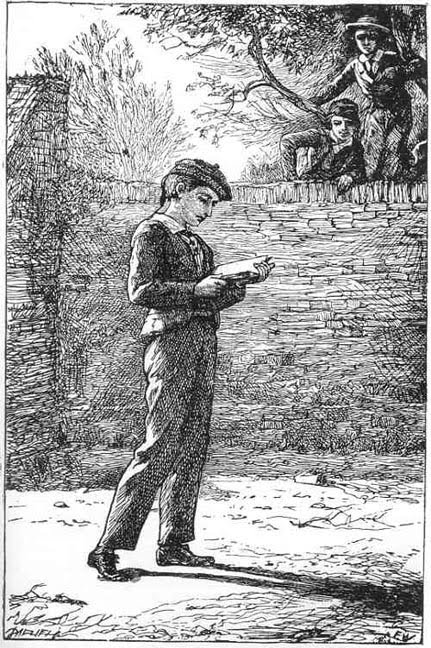
Irish schoolboy, illustration

A clever and economical innovation of Dublin bakers during the nineteenth century, gurr cake was a favorite after-school treat for many a young pupil “on the gurr,” or playing hooky. This illicit sweet was comprised of stale bread (on luckier days, day-old cake replaced the bread) which was mixed with sugar and dried fruit. The mixture of bread and fruit was then stacked between layers of dough and the entire concoction sprinkled with powdered sugar.

Because of its cheapness, gurr cake became synonymous with street urchins and was used to describe the hardened runaways who subsisted on it. But you need not be dodging school in order to enjoy a piece of this delightfully frugal cake. Below is a recipe from Culinaria: European Specialties for a slightly richer version of gurr cake. Enjoy it with tea, coffee or a glass of warm, rum-infused milk.

Gurr Cake

8 slices of stale bread without crusts
3 Tbs flour
1/2 tsp baking powder
2 tsp bread seasoning
1/2 cup (100 g) brown sugar
2 Tbs butter
6 oz (175 g) currants or dried mixed fruit
1 beaten egg
4 Tbs milk
8 oz (250 g) short pastry
Caster sugar

Soak the bread for 60 minutes in water, then squeeze dry. Mix with the flour, baking powder, seasoning, sugar, butter, currants, egg and milk. Stir the ingredients thoroughly.
Line a baking pan approximately 8 inches (22 cm) square with half the pastry, place the bread mixture in the pan, distribute evenly and cover with the remaining pastry. Score through several times.
Bake for about 60 minutes at 375 degrees F. (190 degrees C.) in the oven. Sprinkle with sugar and leave to cool in the baking pan. Then cut the cake into 24 small square pieces (such a piece in the last century cost a half penny).


Why Fast and Fermented Foods by Christine Baumgarthuber

Would you rather receive The Austerity Kitchen by email? Then sign up for my Substack.

And, if you’d like to help the Kitchen keep cookin’, please consider picking up copies of my books, Why Fast? and Fermented Foods.