Rice Pudding for Practical Dietetics

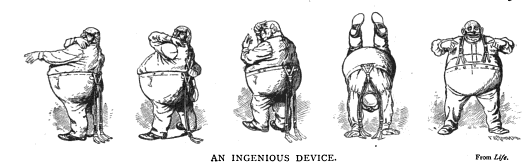
vintage cartoon about wearing suspenders

In Practical Dietetics: With Reference to Diet in Disease (1905), Alida Frances Pattee provides instruction for those entrusted with feeding men and women afflicted with various “acute diseases.” “The nurse,” she writes, “has a far better opportunity than the physician to judge of all the conditions of the patient’s digestion, and his likes and dislike for different foods.” In Practical Dietetics, she offers an impressive collection of recipes, many of which appeared on the daily menu for patients at Massachusetts’s General Hospital.

The most common dish in Pattee’s book is, in one variation or another, rice pudding. She suggests that the nurse boil the rice “steadily all day until it becomes a jelly.” “No cereal cooked in a double boiler,” she continues, “is ever over done.”

Whether rice pudding can ever be over done is certainly debatable, but Pattee’s advice to serve all such grain puddings with fruit is a welcome recommendation.

Rice Pudding

1 cup steamed rice
2 tablespoons sugar
1 cup scalded milk
1/2 saltspoon salt
1 tablespoon butter
1/4 cup stoned raisins
1 egg

Scald milk and add butter. Beat egg, add sugar and salt and pour on slowly the scalding milk. Put in pudding dish with rice and raisins. Put bits of butter on top and bake in a moderate oven until custard is set. Serve with Hard Sauce.

Note.—Do not use raisins in case of bowel trouble.


Why Fast and Fermented Foods by Christine Baumgarthuber

Would you rather receive The Austerity Kitchen by email? Then sign up for my Substack.

And, if you’d like to help the Kitchen keep cookin’, please consider picking up copies of my books, Why Fast? and Fermented Foods.
Biscuits and Dried Beef: A Panacea

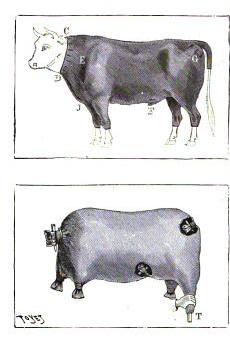
chart of cuts of beef


In his “bright little skit” (as one reviewer called it) Biscuits and Dried Beef: A Panacea (1894), Lindon H. Morehouse shares the adventures of a poor rector who decides “never to incur Indebtedness.” But this resolution proves difficult; the rector’s vestry are unapologetically tightfisted, often even neglecting to render the rector his due pittance of $800.00 per annum. To shame the vestry, the rector sends them invitations to what they suppose will be a lavish dinner. Expectant of toothsome morsels, they are instead greeted with the contents of the rector’s larder — biscuits and dried beef. Having learned their lesson, the vestry pay the rector’s stipend in full the next day.

During lean times, the rector and his wife subsist on roast beef, the virtues of which the rector wryly extols:


It seemed that in the early days of their housekeeping, Mrs. Forest had ordered, and cooked, an eight-pound roast of beef, and as a natural result, roast beef played an important part in their bill of fare for many days after. It had been a source of amusement, but it was one of that kind of “funny episodes” which lose much of their humor if referred to too often, and so a truce had been declared, and the subject was not to be again mentioned.


Roast beef played an important roles in many bills of fare throughout the the work week. The Sunday roast was an economical way to ensure meat figured in more weekday meals than not. A contributor to a 1902 edition of Good Housekeeping shares her recipes for weekday meals that incorporate Sunday roast leftovers. “The meat cakes for dinner [Monday] night were made from a part of the Sunday roast,” she writes, and “Tuesday being ironing day, I saved what was left of my roast for a browned stew on Wednesday.” What became of the roast on Thursday, Friday and Saturday is left to the reader’s imagination.

What Shall I Eat? A Housewife’s Manual (1892) offers a “very delicious” recipe for roast beef with Yorkshire pudding. The author suggests having a roast ready for Saturday, but Sunday will do just as well.

Roast Beef

Have your meat ready for roasting on Saturday, always. Roast upon a grating of several clean sticks (not pine) laid over the dripping-pan. Dash a cup of boiling water over the beef when it goes into the oven ; baste often, and see that the fat does not scorch. About three-quarters of an hour before it is done, mix the pudding.

Yorkshire Pudding.—One pint of milk, four eggs, white and yolks beaten separately; two cups of flour—prepared flour is best; one teaspoonful of salt. Use less flour if the batter grows too stiff.

Mix quickly; pour off the fat from the top of the gravy in the dripping-pan, leaving just enough to prevent the pudding from sticking to the bottom. Pour in the batter and continue to roast the beef, letting the dripping fall upon the pudding below. The oven should be brisk by this time. Baste the meat with the gravy you have taken out to make room for the batter. In serving, cut the pudding into squares and lay about the meat in the dish. It is very delicious.


Why Fast and Fermented Foods by Christine Baumgarthuber

Would you rather receive The Austerity Kitchen by email? Then sign up for my Substack.

And, if you’d like to help the Kitchen keep cookin’, please consider picking up copies of my books, Why Fast? and Fermented Foods.

From the Grimsel Pass: Raclette

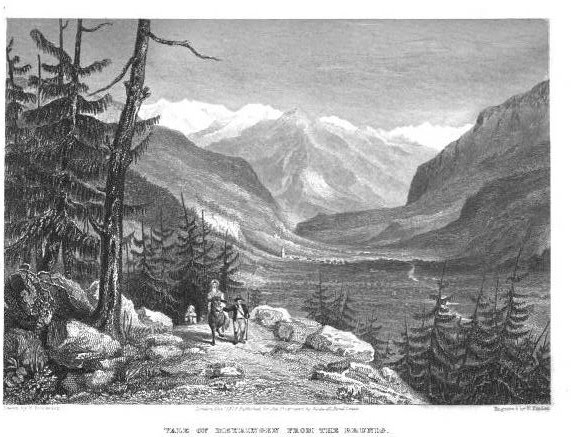
Grimsel Pass in Switzerland

In Illustrations of the Passes of the Alps: By Which Italy Communicates with France, Switzerland, and Germany, Volume One (1829), author William Brockedon writes that “the Pass of Grimsel is much frequented in the height of summer: the fine scenery of the Oberhasli and the upper valley of the Aar, and the direct communication of these by the Grimsel with the Haut-Valais and the glaciers of the Rhone, offer inducements to the traveler to make this passage of the Alps, and will repay the fatigue of the excursion.” Indeed, the stark beauty of Switzerland’s Grimsel Pass, with its slate-gray mountains and black lakes, does recompense the traveler weary from days of trudging up bluff, rugged Alpine paths.

Perhaps, on the way back down, the traveler would stop at one of the few inns nestled in the mountain dales. There he (or she) would likely see raclette on the menu. A recipe from a 1966 edition of Boys’ Life, the official magazine of the Boy Scouts of America, presents the following recipe for raclette and bread as shared by a troop of scouts visiting the Swiss Alps. Serve this dish with pickles and boiled potatoes.

Raclette

“This is a very special cheese called raclette,” explained the boy kneeling at fireside. “It is made in large, round spheres, but I have only half of one here. The reason for cutting it in half is so the fire can warm the exposed edges and soften them. When it is melted just right I will scrape the soft cheese onto your bread. It must be eaten right away if you want to enjoy its full flavor.”

If you are not by a camp fire, heat a chunk of raclette under a broiler.


Baumgarthuber, Christine. Fermented Foods: The History and Science of a Microbiological Wonder. Reaktion Books, 2021.

Would you rather receive The Austerity Kitchen by email? Then sign up for my Substack.

And, if you’d like to help the Kitchen keep cookin’, please consider picking up a copy of my book, which you may find on one of the sites listed here.