Christmas Punch

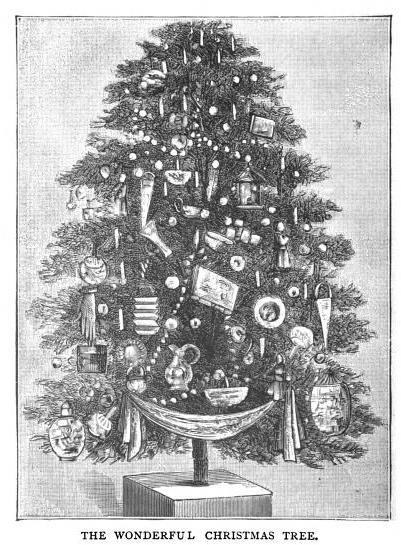
decorated christmas tree, illustration

The December 26, 1874 issue of Punch offered its holiday-weary readers a list of “Christmas Hampers” (written by “a Growler”), among which were found the following seasonal drawbacks:

The Christmas Snow and Rain in the streets

The Christmas Coals

The Christmas Rates and Taxes

The Christmas Country Cousins

The Christmas Nightmare after

The Christmas Family Quarrels, Buried Friendships, and Mournful Memories

A long list of Christmas-induced migraines, indeed. Toward the bottom of the list appears, however, a hamper apt literally to give the merry maker a splitting headache: “The Christmas Champagne of economic dinner-givers.”

Much better to serve a spicy punch, like this one from Mrs. Norton’s Cook-Book (1917), if one seeks to be both economical and hospitable.

Christmas Punch

Juice of six oranges, six lemons, two grapefruit, one grated pineapple, two cups of sugar melted in one cup of hot water then cooled, one cup of strong Ceylon tea; when all is chilled add four quarts of water turned over a block of ice in the punch bowl. Drain a small bottle of maraschino cherries, and float them on top with a few candied mint leaves.


Why Fast and Fermented Foods by Christine Baumgarthuber

Would you rather receive The Austerity Kitchen by email? Then sign up for my Substack.

And, if you’d like to help the Kitchen keep cookin’, please consider picking up copies of my books, Why Fast? and Fermented Foods.

Good Uncle Nietzsche


Today’s post appears at The New Inquiry. It concerns a picnic of cake and chocolate sponsored by the philosopher Friedrich Nietzsche.

A Truss of Greens

illustration from Little Dorrit by Charles Dickens

In his 1857 novel Little Dorrit Charles Dickens describes the foodstuffs purveyed by a small restaurant as seen through its dirty windows:

They walked on with him until they came to a dirty shop-window in a dirty street, which was made almost opaque by the steam of hot meats, vegetables, and puddings. But glimpses were to be caught of a roast leg of pork, bursting into tears of sage and onion in a metal reservoir full of gravy, of an unctuous piece of roast beef and blisterous Yorkshire pudding bubbling hot in a similar receptacle, of a stuffed fillet of veal in rapid cut, of a ham in a perspiration with the pace it was going at, of a shallow tank of baked potatoes glued together by their own richness, of a truss or two of boiled greens, and other substantial delicacies.

Though such delights as glimpsed through a dirty shop-window might not tempt more delicate appetites, a “truss or two of boiled greens” can be a nice addition to dinner. The 1865 cookbook Mrs. Goodfellow’s Cookery as It Should Be presents a tasty recipe for boiled greens. Its author writes, “Vegetables are a most useful accessory to our daily food, and should be made the object of greater study in their preparation than they usually receive.” Here’s to this useful accessory finally getting its due.

Boiled Greens

Much depends upon boiling greens, and the manner in which it is done. The water should be soft, and a handful of salt thrown into the water, which should boil before the greens are put in; when, in, the water should then be made to what by cooks is termed “gallop,” the saucepan kept uncovered, and when the greens sink, they are done, take them out quickly and dress for table.


Why Fast and Fermented Foods by Christine Baumgarthuber

Would you rather receive The Austerity Kitchen by email? Then sign up for my Substack.

And, if you’d like to help the Kitchen keep cookin’, please consider picking up copies of my books, Why Fast? and Fermented Foods.