Liver Dumpling Soup

immigration to the USA and liver dumpling soup

Bertha M. Wood explores the secrets of health and happiness in her 1922 treatise Foods of the Foreign-Born in Relation to Health. In this unique work, Wood, an American dietitian who studied immigrant cuisine, looks at the foods enjoyed by Mexican, Portuguese, Italian, Hungarian, Turkish, Jewish and Syrian immigrant families in an attempt to discern the foods responsible for these people’s good health.

Wood devotes a large section of the book dissecting the diets of “Poles and other Slavic peoples.” “The Polish children and those of the other Slavic peoples come from a sturdy race,” she writes, “Upon arrival in this country they have round, well-shaped heads, rosy cheek, and strong bodies. With their kerchiefs over their heads they make fascinating pictures of health.”

Wood presents Polish liver dumpling soup as one of the more nutritious dishes enjoyed by Slavic families in the United States. Here’s a recipe — apt perhaps to make for rosy cheeks — from the 1922 cookbook The Art of German Cooking and Baking.

Liver-Dumpling Soup

(Quantity for 6 Persons)

1/4 lb. of chopped calf’s liver
1 tsp. butter
A little grated onion
1 tsp. finely chopped parsley
5 tbsps grated rolls
2 eggs
1 tsp. salt, (scant)
1 pinch nutmeg

Preparation: The butter is stirred and liver, yolk of eggs, salt, parsley, onion, nutmeg and roll crumbs added. The whites of eggs are beaten to a froth and stirred into the mass, then small dumplings are formed. When the bouillon comes to a boil, put dumplings in and boil 1/4 hour. The soup should be served at once.


Why Fast and Fermented Foods by Christine Baumgarthuber

Would you rather receive The Austerity Kitchen by email? Then sign up for my Substack.

And, if you’d like to help the Kitchen keep cookin’, please consider picking up copies of my books, Why Fast? and Fermented Foods.
Wartime Potato Drop Cookies

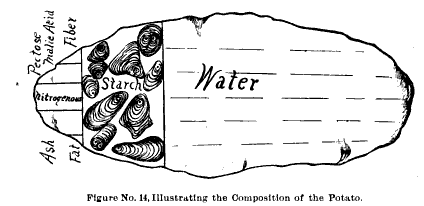
composition of a potato, illustration

Mashed potatoes with roast beef. Boiled potatoes with capon and cranberry sauce. Fried potatoes with eggs and sausage gravy. The humble potato compliments most foodstuffs in no uncertain ways. But potato drop cookies with a glass of milk? The author of the 1918 cookbook Everyday Foods in War Time assures readers that these thrifty, potato-based cookies are indeed a treat.

Wartime Potato Drop Cookies

Hot mashed potatoes, 1 1/2 cups
Sugar, 1 1/4 cups
Beef or mutton fat, 1 cup
Flour, 1 3/4 cups
Baking powder, 2 teaspoons
Cinnamon, 1 teaspoon
Cloves, 1/2 teaspoon
Nutmeg, 1/2 teaspoon
Raisins, chopped, 1/2 cup
Nuts, chopped, 1/4 cup

Combine the ingredients in the order given and drop the mixture by spoonfuls on a slightly greased tin. Bake the cookies in a moderate oven.


Why Fast and Fermented Foods by Christine Baumgarthuber

Would you rather receive The Austerity Kitchen by email? Then sign up for my Substack.

And, if you’d like to help the Kitchen keep cookin’, please consider picking up copies of my books, Why Fast? and Fermented Foods.

Workhouse Soup and Cottage Loaves

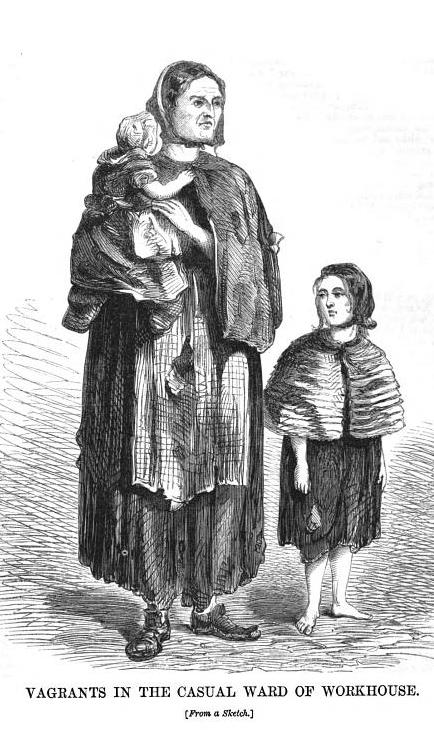
victorian workhouse inmates

The workhouses of Edwardian England served a most excellent split pea soup. Or so claims the 1906 Report of the Department Committee on Vagrancy. Under the Order of 1882 vagrants who intend to be short-term workhouse guests can dine on a spare dinner of bread and cheese, but to those planning to spend more than a day in the workhouse a dinner of bread and soup is offered — in rather exact and somewhat less than lavish portions. Six ounces of bread and a pint of soup go to warm the soul of the beggar, a person otherwise considered to be “a nuisance [who] infests the roads and threatens women and insists on having food when their husbands are absent, and all that sort of thing.” Such minutely observed economy must not divide the beggar from some basic sustenance, as meager as this might be.

And what goes into this bone-warming bit of comestible charity? According to the “Dietary Order” the “ingredients for pea soup in the workhouse are to each pint, three ounces of raw beef free from bone, two ounces of bones, two ounces of split peas, half an ounce of oatmeal, one ounce of vegetables, salt, pepper, and herbs to taste.”

As the Report indicates, workhouse soup goes well with bread. Try serving it with a cottage loaf, like this one from the 1905 Still Room Cookery: Recipes Old and New.

Cottage Loaf

Cottage loaves are formed from two balls of dough, a smaller and a larger, placed one on the top of the other. A hole is made through the top to connect the two, and 4 slits cut in the sides. The oven shelves must have been scrubbed previously and floured and the dough set down on them.

The loaves should stand in a warm place for 1/2 an hour and are then baked in a good oven, for the first 1/4 of an hour on the top shelf, and then moved to the centre shelf to bake another 1 1/4 hours. The loaves must stand on their sides to cool.

This recipe has been used for many years without a failure.

Household Bread (No. 2).

Another recipe made with Barm [the foam on top of beer and other fermented alcoholic beverages].

4 Ib. flour
1/2 pint warm water
1 pint of barm.

Put the flour into a basin, mix in a pinch of salt, make a hole in the centre and pour in the warm water, stir the barm in with it, shake a little flour over the top. Cover the basin with a cloth and let it stand in a warm place all night. At about 9 o’clock in the morning mix it with enough warm water to make a nice dough, and knead it well. Cover again with a cloth and let it stand for 2 hours. Make into loaves and bake.


Why Fast and Fermented Foods by Christine Baumgarthuber

Would you rather receive The Austerity Kitchen by email? Then sign up for my Substack.

And, if you’d like to help the Kitchen keep cookin’, please consider picking up copies of my books, Why Fast? and Fermented Foods.