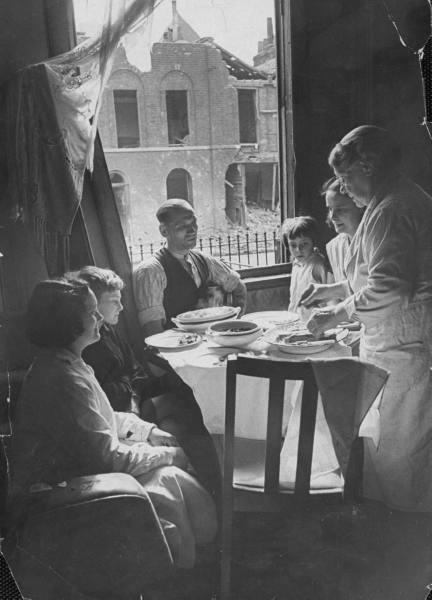
Bombed out of a boarding room in Kensington and thus forced to take up residence in the sleepy suburban town of Thames Lockdon, Miss Roach – the thirty-nine year old beak-nosed narrator of Patrick Hamilton’s 1947 novel The Slaves of Solitude – inhabits a small, pink room on the top floor of a tea house turned boarding house under conditions “of intense war, intense winter and intense blackout in the month of December.”
Continue readingA Recipe for Victory: Wartime Cornmeal Waffles
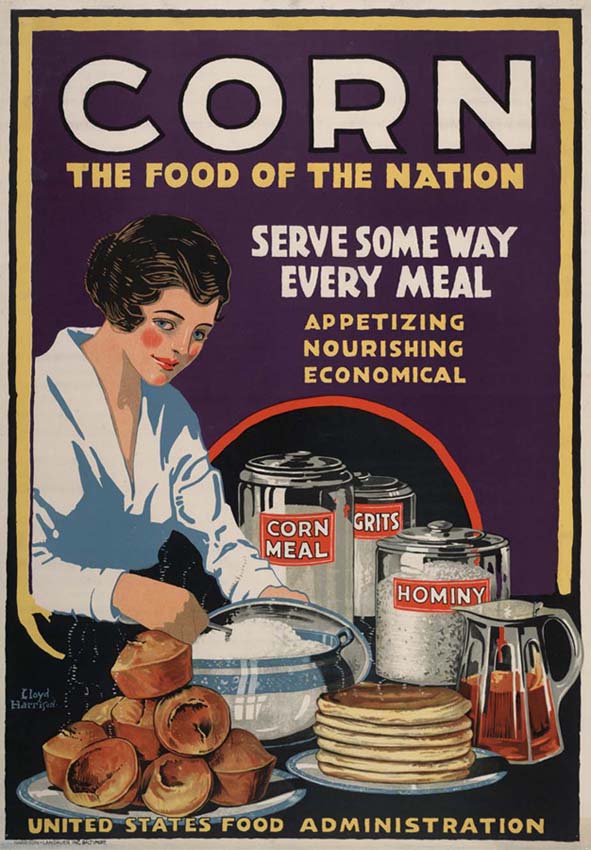
The year 1918 saw the the publication of the Twentieth Century Club War Time Cook Book, an elegant, informative tome filled with useful and tasteful economical recipes. The federal food administrator of Pennsylvania praised the book, deeming it instrumental in winning “the war that is being waged to guarantee the safety of American home” and in ensuring the “permanency of American institutions.” Though he cautions that “much more will be demanded before we can hope for victory, as much perhaps as has been demanded in England and France,” he assures readers that “there is no more important war activity in which women may engage than the careful conservation of our food supply which is altogether inadequate to the needs our own men and our allies at the fighting front.”
Continue readingFanfare for a Common Fungus: The "Trumpet of Death"
Depending on the region, June heralds the arrival of a coal-black mushroom known variously as the “trumpet of death,” the “horn of plenty” or “black chanterelles.” The fruiting bodies of this mushroom encircle oaks and tend to bunch under rhododendrons, proliferating seemingly overnight and disappearing usually within a week.
Continue reading


