Economical Recipes: Gingersnaps and Chowchow

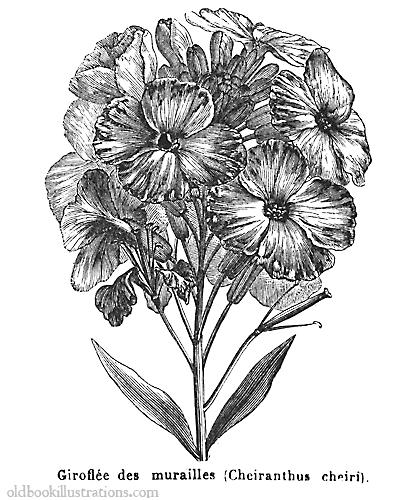
wallflower – Erysimum cheiri

An 1894 edition of Good Housekeeping includes a delightful and informative article on the everyday workings of a small farm in the Ozarks. The “brave and cheerful” housewife at this farm, called Orchard Hill Farm, is “a self-appointed committee of ways and means to see to it that the outgo does not exceed the income.” Indeed, the good farm wife shares a number of ingeniously economical recipes with the journalist from Good Housekeeping. For instance, upon praising the farm wife’s excellent coffee, the journalist finds that it was half sweet potato; “chop them fine, dry and roast them, then grind,” the farm wife reveals, “I use a tablespoon of sweet potato to every tablespoon of coffee.”

Below are two very economical recipes from Orchard Hill Farm: ginger snaps and chowchow, a pickled vegetable stew. Feel free to reduce the quantities given in the recipes; they are intended to feed large crowds of hungry farmhands.

Ginger Snaps

One half gallon of sorghum, two tablespoonfuls of ginger, two tablespoonfuls of salt, one teaspoonful of black pepper, one tablespoonful of cinnamon, two large cupfuls of lard, two tablespoonfuls of soda flour to make a very stiff dough. Bake quickly. This makes a bushel of ginger snaps.

Chowchow

Two quarts of cucumbers, two quarts of green tomatoes, two quarts of onions, two quarts of cauliflower or cabbage. Soak in a weak brine over night. Cook separately until tender. For the paste use one gallon of vinegar, one large cupful of flour, one pound of mustard, one and one half pounds of sugar. Stir the paste until it boils then pour it over the vegetables.


Why Fast and Fermented Foods by Christine Baumgarthuber

Would you rather receive The Austerity Kitchen by email? Then sign up for my Substack.

And, if you’d like to help the Kitchen keep cookin’, please consider picking up copies of my books, Why Fast? and Fermented Foods.
Fried Elderberry Blossoms

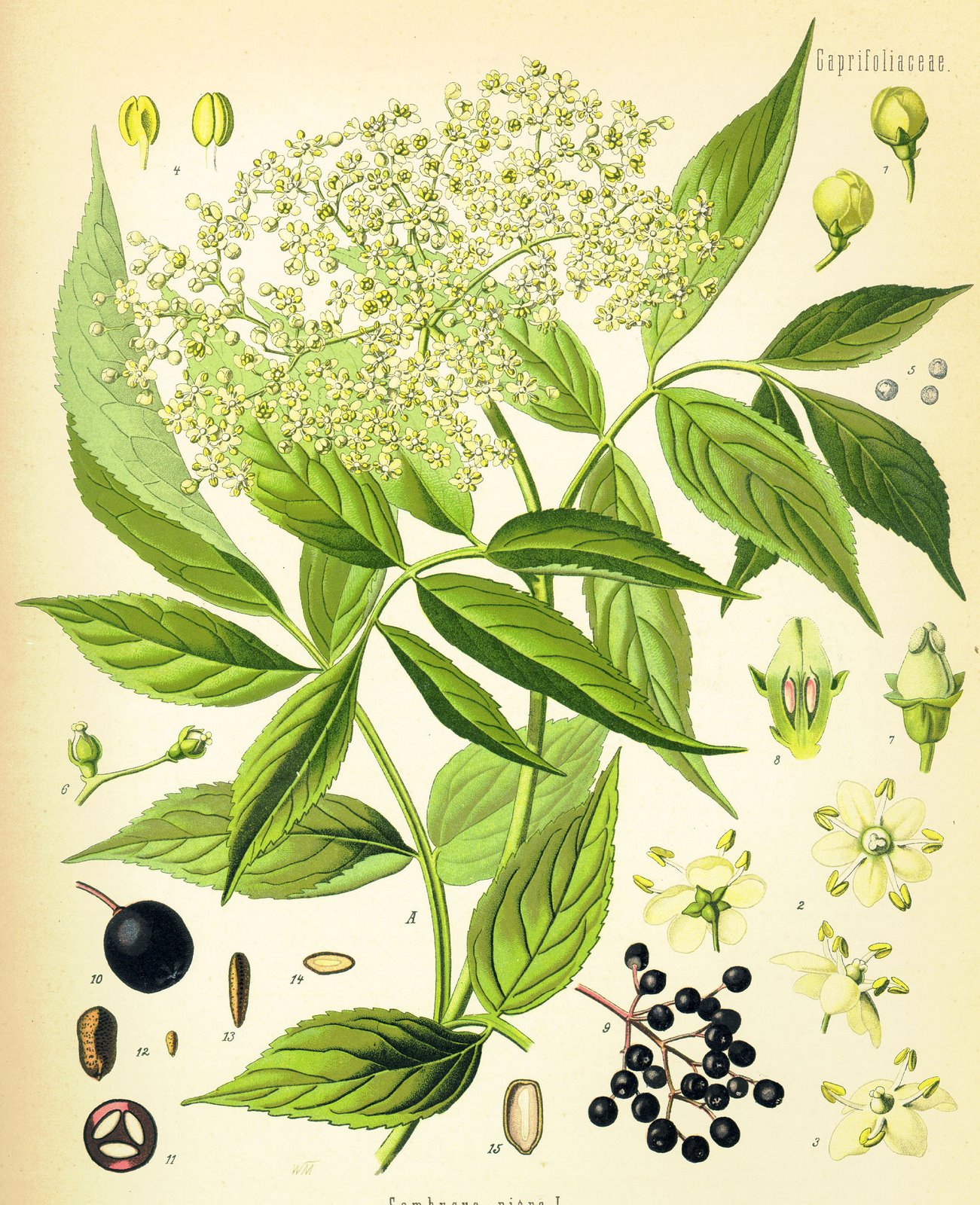
Springtime forests abound with culinary delights and elderberry blossoms are one of them. The fragrant cream-colored blossoms of the common elderberry tree appear toward the end of May, turning to small purple berries by late June. Poisonous in their unripe state, the mature berries are used to make wine, brandy, jellies, chutneys and pies. The flowers are popular in teas and cordials, because their balmy flavor lends itself to sweetened beverages. Both the berries and flowers contain an abundance of antioxidants and other beneficial properties.

elderflower and elderberries schematic illustrationElderberry flowers and berries


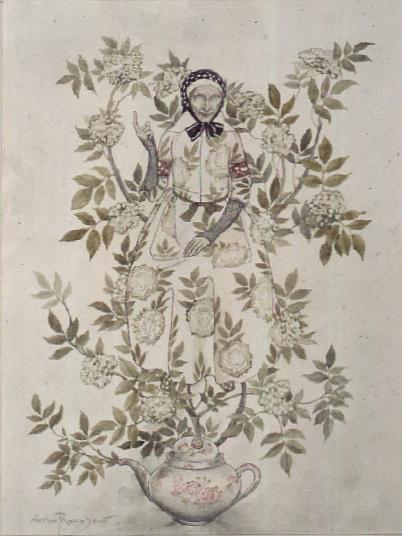
The 1888 Family Living on $500 a Year: A Daily Reference-Book for Young and Inexperienced Housewives suggests using elderberries, along with sugar and allspice, to make a spicy ketchup. But the elderberry also has associations and uses far more mystical: In England and Scotland, the elderberry tree was thought to possess narcotic properties, and to sleep beneath the shade of its leaves was to court certain danger. Amulets made from the tree’s leaves and bark were used as evil charms. But the elderberry didn’t just lend itself to purposes malign; Hans Christian Andersen’s story “The Elder-Tree Mother” (1845) tells of the elderberry’s ability to ward off evil magic and summon benevolent spirits. And the Tsimshians of British Columbia believed the elderberry bush helped summon mankind itself into existence by coupling with the Raven-god.

Elder-Tree MotherThe Elder-Tree Mother


Here’s a German recipe for fried elderberry blossoms. It’s a simple dish that costs next to nothing. Serve it as a dessert or an afternoon snack.

Fried Elderberry Blossoms

8 elderberry blossoms, with the stems still attached
9 ounces flour
8.5 ounces milk
2 tablespoons rum
1 pinch salt
2 teaspoons honey
1 egg
oil for frying
1 teaspoon cinnamon
3 teaspoons sugar

Lay the elderberry blossoms in a dish with water and gently swirl the water around the blossoms. Lay them on a dishtowel to dry. Mix the flour, milk, rum, salt, honey and egg into a thin batter. Let stand 30 minutes. Heat the oil in a large pan to 356 degrees F. Test the heated oil with a spoonful of batter — it should quickly become a light brown. Dip the blossoms in the batter and fry in the oil until golden brown. Then lay them on a plate covered in a paper towel to absorb the excess oil. Mix the cinnamon and sugar and sprinkle over the fried blossoms (you can also use powdered sugar). Serve immediately.


Why Fast and Fermented Foods by Christine Baumgarthuber

Would you rather receive The Austerity Kitchen by email? Then sign up for my Substack.

And, if you’d like to help the Kitchen keep cookin’, please consider picking up copies of my books, Why Fast? and Fermented Foods.

Wheatless and Sugarless Wartime Cooking: Oat Flour Muffins

During the winter of 1917-1918, The Mrs. Farmer’s School of Cookery developed a collection of recipes to aid the American housewife in conserving meat, wheat, sugar and fats. These austerity recipes were tested in the school’s “Wartime Cookery” class.

The Mrs. Farmer’s School of Cookery was started in 1902 in Boston, Massachusetts. It offered classes to both gentlewomen and housewives on the rudiments of cooking and household management. The Wartime Cookery class was just one of many classes offered at the school, which later came to specialize in convalescent diets.


Fanny Farmer testing wheatless and sugarless wartime baking recipes
Mrs. Fanny Farmer testing wartime recipes


Here’s a recipe for oat flour muffins from Mrs. Farmer’s Wartime Cookery class. Oat flour produces a delightfully light texture in baked goods. Should you not find oat flour in your area, grind oatmeal in a coffee grinder until fine.

Oat Flour Muffins
2 1/2 cups oat flour
4 teaspoons baking powder
1/2 teaspoon salt
1 cup milk
1 egg, well beaten
2 tablespoons molasses

1 tablespoon melted shortening
Mix dry ingredients together in a mixing bowl. Add milk, the egg, molasses and shortening. Bake in buttered gem [muffin] pans twenty-five minutes [in a medium oven]. This may be baked in a bread pan and sliced when cold.
 

Why Fast and Fermented Foods by Christine Baumgarthuber

Would you rather receive The Austerity Kitchen by email? Then sign up for my Substack.

And, if you’d like to help the Kitchen keep cookin’, please consider picking up copies of my books, Why Fast? and Fermented Foods.