Pease Pudding Hot

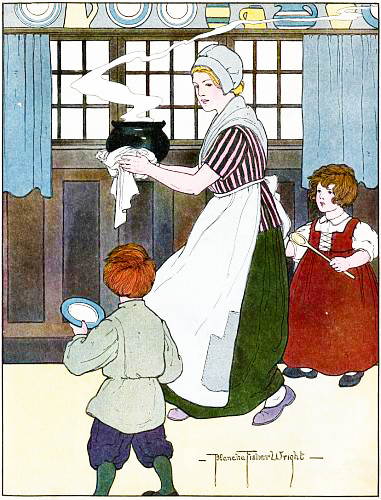
Illustration of woman serving pease porridge

“Pease pudding hot, Pease pudding cold,
Pease pudding in the pot — nine days old.
Some like it hot, some like it cold,
Some like it in the pot, nine days old.”

While the origins of “Pease Pudding Hot” are unknown, the dish described in the rhyme is a thick, smooth paste made from dried peas or lentils. Traditionally served with boiled bacon or a type of sausage called a saveloy, it appeared frequently on the tables of the lower classes, where, more often than was desired, it sat in a pot for nine days (or more), heated and then reheated until finished off.

Was nine-day-old pease pudding palatable, you ask? The July 24, 1884 edition of Knowledge, An Illustrated Magazine of Science reports that aged pease pudding was, in fact, a great treat. It mentions a reader who “has seven dishes of [pease pudding] in his larder, corresponding to the days of the week [and] each being seven days old.” The brave reader claims old pease pudding is easier to digest than new. The editor of Knowledge, however, warns the nursery rhyme offers sage advice: Nine days is the limit pease pudding can be kept in a larder before it’s likely to make the unwary diner ill.

The following recipe for pease pudding comes from Maria Eliza Ketelby Rundell’s The New Family Receipt-Book (1810). Serve pease pudding with boiled pork or, if you are vegetarian, by itself. Do not, however, keep your pease pudding for more than a day or two without refrigeration.

Pease Pudding Hot

Take a pint of yellow split pease, and after tying them loosely in a cloth, boil them in water until they become tender. Then rub them through a cullender [colander] or hair sieve [sieve], and add to the pulp a bit of butter, a spoonful of cream, two eggs, and white pepper and salt. After being uniformly mixed, put the pease into a cloth; tie tightly, and boil for the space of half an hour, to make the ingredients set.


Why Fast and Fermented Foods by Christine Baumgarthuber

Would you rather receive The Austerity Kitchen by email? Then sign up for my Substack.

And, if you’d like to help the Kitchen keep cookin’, please consider picking up copies of my books, Why Fast? and Fermented Foods.

From the Viennese Woods: Bärlauch Soup

Walk through the Viennese woods on a warm, spring day and you will inevitably happen upon clusters of bärlauch, or wild garlic. Its pungent aroma fills the air, and its large emerald green leaves, out of which peek sprays of white flowers, carpet the forest floor.

To many Austrians, bärlauch is a welcome sight, one associated with springtime soups and tart, creamy spreads tasting of onion and chives.
A forest floor carpeted with bärlauch


But in days past bärlauch was more than just a springtime treat; it helped many Austrians survive the last days of the Second World War. During the cold, wet spring 0f 1945, when the Soviets broke through German defenses and advanced to Vienna, many civilians, faced with dwindling rations and little hope of securing fresh provisions, looked to bärlauch as an important source of food. Those lucky enough to own a Sommerhütte, or summer cabin, fled to the rolling hills of the Viennese woods, where the plant grows in abundance. There they harvested the bärlauch clusters and prepared simple soups, without cream or seasoning.


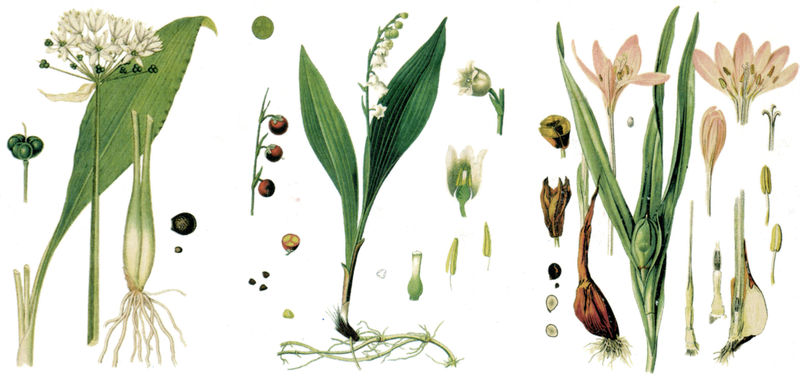
Bärlauch


Bärlauch soup was usually the only meal of the day in those summer cabins. The garlicly broth was welcome, though; filled with vitamin C and other nutrients, it helped many Austrians fend off starvation during the final days of battle that spring of 1945.

Here’s a traditional bärlauch soup recipe translated from the German. While not as austere as the soup eaten during the war, it is just as nourishing. You can find bärlauch, also known as ramson, growing wild in deciduous forests.

Bärlauch Soup

50 grams bärlauch
1 onion
20 grams butter
20 grams flour
1/8 liter milk
3/4 liter soup stock
white pepper
salt
100 grams cream

Wash the bärlauch thoroughly and cut it into thin strips. Dice the onion and place in a large soup pot with the butter. Cook over medium heat until the onions are transparent. Add the flour, mix into the onions and then add the milk, making a smooth sauce. Add the soup stock and bärlauch strips. Cook the soup for ten minutes on low heat.

Puree the soup with either with a handmixer, or in a food processor. Season with white pepper and salt.

Beat the cream until stiff. Shortly before serving, whisk the beaten cream into the soup. Serve with a crusty white bread, such as Vienna rolls.


Why Fast and Fermented Foods by Christine Baumgarthuber

Would you rather receive The Austerity Kitchen by email? Then sign up for my Substack.

And, if you’d like to help the Kitchen keep cookin’, please consider picking up copies of my books, Why Fast? and Fermented Foods.