Wheatless Wartime Boston Brown Bread

“FUEL IS FOR FIGHTERS. Do not waste it. Save WHEAT, MEAT, SUGARS, AND FATS. Send more to our Soldiers, Sailors and Allies.”

As a professor of nutrition at Columbia University, Mary Schwartz Rose made it her ambition to show the American housewife that the above message from the United States Food Administration did not necessarily mean months of tasteless meals lacking in nutrition. In her 1918 cookbook Everyday Foods in War Time, Rose extols the virtues of the wheatless, sugarless diet. To give up wheat, so “soft yet firm,” takes “courage and resolution,” she admits. And sugar does tempt from the soda fountain, bakery and candy shop. But Rose reminds us that oatmeal is rich in iron, one-half pound of cornmeal is enough to furnish “everything needed by the body,” and a touch of calcium-rich molasses can protect against the siren song of cane sugar.

wartime ration poster for cottage cheese
An American poster from the First World War

The following recipe for wartime Boston brown bread is a perfect example of a recipe that proves more nutritious and delicious than its peacetime counterpart–Rose even makes a special point of mentioning that this recipe has “two and one half times the food value of a twelve-ounce loaf of white bread.” If desired, serve this bread with butter and honey, or with Mystic Baked Beans.

Wartime Boston Brown Bread

1 cup rye meal
1 cup corn meal
1 cup finely ground oatmeal
1 1/2 cups milk
3/4 teaspoon baking soda
1 teaspoon salt
1 cup molasses
2 teaspoons baking powder

Mix and sift dry ingredients, add molasses and milk, stir until well mixed, turn into a well-greased mold, and steam three and one-half hours. The cover should be greased before being placed on the mold. The mold should never be filled more than two-thirds full. A one-pound baking powder box makes the most attractive shaped loaf for steaming; place mold on a trivet in kettle containing boiling water, allowing water to come half-way up around mold; cover closely and steam, adding as needed more boiling water. One cup chopped peanuts and one cup dates may be added.


Why Fast and Fermented Foods by Christine Baumgarthuber

Would you rather receive The Austerity Kitchen by email? Then sign up for my Substack.

And, if you’d like to help the Kitchen keep cookin’, please consider picking up copies of my books, Why Fast? and Fermented Foods.
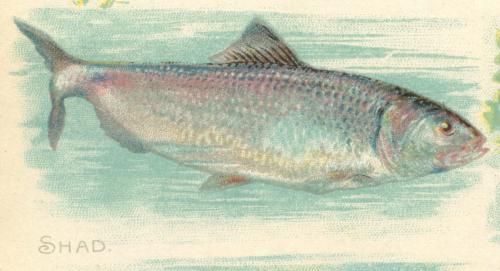
Shad: The Colonist’s Curse

With its small olive eyes stamped above a slight snubbed nose, a mouth fixed in a downward smile and a puffed opalescent belly, the shad is an unassuming fish.

But it’s also a tasty fish. Nineteenth-century epicures prized the shad’s fatty tender flesh and delicate flavor. During shad season (February to June) American fishermen thronged to rivers with scoop nets and seines, hoping to bring home their share of the popular fish. In Brooklyn great heaps of freshly-caught shad could be found piled on doorsteps, waiting for the unlucky housewife to do the malodorous business of cleaning and deboning before salting and storing the fish away.

Shad a food fish of Norht America
Shad, a popular food fish among North American colonists


Just a century before, however, shad was considered a positive nuisance. Farm laborers living near the Connecticut River insisted shad be served but once a week for dinner. Anything more was considered cruel and unusual treatment. Entire families felt dining on shad a shameful act: One night, while feasting on a dish of broiled shad cheaply bought, a family in Hadley, Massachusetts suddenly heard a knock at the front door. Terrified lest someone witness the ignoble and unfashionable dinner, they quickly hid the plate of half-eaten shad in a cupboard before inviting the unexpected guest in.

Shad then was fed to the hogs and the poor. In 1733, an impoverished housewife could purchase two shad for a penny — a price almost embarrassingly cheap. The fish was usually eaten baked, boiled or broiled, but never fried as it contains too much oil. Should you not feel an undue amount of shame at the prospect of preparing such a fish, try this 1856 recipe for broiled shad, which can be served with a slice of lemon and boiled potatoes.

Broiled Shad

Scale, wash and score the shad, then mix together one tablespoon of salt, and one of sugar; rub this over the fish, and let it remain for two hours; then wash it again, dry it on a towel, and season with cayenne pepper and salt. Heat the gridiron [or frying pan] and butter the bars; broil it [the fish] gradually; when one side is well browned, turn it. When done, place it on a dish; baste with butter and send to table hot.


Why Fast and Fermented Foods by Christine Baumgarthuber

Would you rather receive The Austerity Kitchen by email? Then sign up for my Substack.

And, if you’d like to help the Kitchen keep cookin’, please consider picking up copies of my books, Why Fast? and Fermented Foods.

Watercress: A Victorian Superfood

Watercress vendor in 19th-century CornwallAt the mention of watercress, we often think of afternoon tea parties and anemic sandwiches with their crusts neatly removed.

But watercress was a favorite of the Victorian working classes, who valued its spicy, tangy flavor and relative cheapness — watercress sold for a few pence a bundle, a price well within the budget of even the poorest laborer. They paired it with plain, black bread for lunch and sometimes, when times were tougher than usual, dinner. For laborers living under the worst conditions, the black bread and watercress sandwich was the only food available.


The Victorian working classes actually benefitted from their watercress-based diets. A recent article in the Journal of the Royal Society of Medicine concluded that watercress, which is packed full of vitamins and minerals, contributed to the surprisingly good health of early-Victorian laborers.

Luckily watercress could be found on almost any street corner in larger cities like London. Watercress sellers would stand with their wooden carts and baskets from sunrise to sunset, tempting every man and women who passed with mountains of glistening watercress, which they sold in paper-wrapped bunches. Customers would frequently eat their watercress right out of the paper wrappers, enjoying the plant as one would enjoy an ice-cream cone.


Watercress is available in most supermarkets for about $0.70 a bunch. The Austerity Kitchen does not recommend you eat your watercress plain, however. Instead, try it in salads and soups. Its peppery flavor goes well with many savory dishes. Here’s a delightful recipe from watercress.co.uk, a website devoted to promoting the cause of watercress:


Watercress Omelette with Mushroom and Stilton

0.5 ounces butter
2.5 ounces mushrooms
3 eggs
1 ounce Stilton, or cheese of your choice
1.5 ounces watercress

Melt the butter in a non-stick frying pan. Add the sliced mushrooms and cook over a high heat until golden brown. Remove from the pan with a slotted spoon. Stir a handful of chopped watercress into the beaten eggs and season with salt and pepper. Pour the eggs into the hot pan and tilt the pan to cover the base with the mixture.

Reduce heat to moderate and cook until the omelet is just set and the underside is golden brown. Scatter the mushrooms and Stilton over the top. Slide the omelette on to the plate and fold in half. Garnish with extra watercress and serve immediately.

If you want to save a few dollars, substitute Feta cheese for Stilton. Serve this omelette with a green salad and, of course, black bread!


Why Fast and Fermented Foods by Christine Baumgarthuber

Would you rather receive The Austerity Kitchen by email? Then sign up for my Substack.

And, if you’d like to help the Kitchen keep cookin’, please consider picking up copies of my books, Why Fast? and Fermented Foods.