Bone Stock for Soup

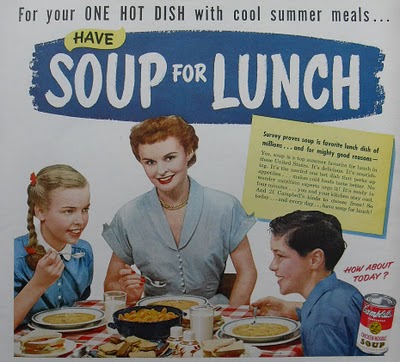
vintage ad for canned soup

Soup bones have served as a base for many a delicious stew and soup over the centuries. An 1878 edition of the American Agriculturist praises the soup bone for its easy versatility: “Any good lean meat may be used for soup, for it is the juice of the meat that is the essential principle of meat soup. But bones contain gelatin, which is chiefly useful in giving body to the soup,” an article from the journal informs us. Indeed, soup bones not only give soup a lovely body — they also impart numerous beneficial vitamins and minerals to the stock. The Agriculturist claims that shin and leg bones make the best soup, but certainly any type of bone will greatly improve the flavor and nutritional profile of any vegetable soup.

Certainly soup bones, which can be had for under a dollar from your local butcher, are a most economical addition to one’s weekly shopping list. A thick and hearty soup can be made from a single bone and a few vegetables of one’s choice.

The 1898 New Galt Cook Book offers a recipe for a tasty stock made from soup bones. Add any vegetable you wish to this stock; parsnips, carrots, onions and kale make for a most tasty soup. If your budget allows, stir in strips of stew meat to make a more hearty meal, though this is unnecessary given that the bone alone does a fine job of thickening the soup stock. And though the recipe below suggests you break the bones into small pieces, this need not be done; with enough boiling (about one hour) the gelatin will be able to thicken the stock without the bones having to be broken.

Bone Stock for Soup

Bones of any meat which has been dressed, as sirloin bone, leg of mutton bone, etc., two scraped carrots, one stick celery, enough cold water to cover the bones or enough of the liquor left from braising meat to cover them, one spoonful of salt. Break the bones into very small pieces, put them into a stew pan with the carrots and celery, cover them with cold water or cold braise liquor and let it boil quickly till the scum rises. Skim it off and throw in some cold water when the scum will rise again. This must be done two or three times till the stock is quite clear, then draw the pan from the fire [or heat] and let it stew for two hours till all the goodness is extracted from the bones; strain it off and let it stand all night. The next day, take off the grease [from the top of the soup stock] very carefully and lift it from the sediment at the bottom of the pan. It will then be fit for use.


Why Fast and Fermented Foods by Christine Baumgarthuber

Would you rather receive The Austerity Kitchen by email? Then sign up for my Substack.

And, if you’d like to help the Kitchen keep cookin’, please consider picking up copies of my books, Why Fast? and Fermented Foods.

Wine and Wartime Foods: Meat Loaf

wartime propaganda about food waste

“Yes, wine does things for plain war foods,” a 1944 advertisement for the American Wine Advisory Board claims. “Don’t give up your friends!,” it continues, “Keep on having them over to your house. Remember–it’s good company, not party food, that makes a dinner!” But still the Wine Advisory Boards recommends one add a splash of wine to bland, wartime fare to enliven the party: “If you’ll make your meat loaf with a little red table wine, you’ll find it becomes banquet fare. It’s that way with other wartime dishes, too. With a touch of wine in the cooking, you can glorify the flavor of the plainest food.”

Below is a wartime recipe from the Wine Advisory Board for meat loaf. Use an inexpensive wine, and serve the finished dish with mashed potatoes and a vegetable.

Fancy Wartime Meat Loaf

To prepare it, you combine 3/4 lb. ground beef, lamb or veal with 3/4 cup rolled oats and 1/2 cup Burgundy or Claret wine. Add 3 tbsps. chopped onion, 1 1/2 tsps. salt, 1/4 tsp. pepper, 1/4 tsp. poultry seasoning, 1 beaten egg, and 2 tbsps. butter or bacon drippings. Pack into greased small loaf pan, and bake in moderate oven (350 degrees F.) 1 hour or until done. Serves 4 or 5.


Why Fast and Fermented Foods by Christine Baumgarthuber

Would you rather receive The Austerity Kitchen by email? Then sign up for my Substack.

And, if you’d like to help the Kitchen keep cookin’, please consider picking up copies of my books, Why Fast? and Fermented Foods.

From the Frugal American Housewife: Pork and Beans

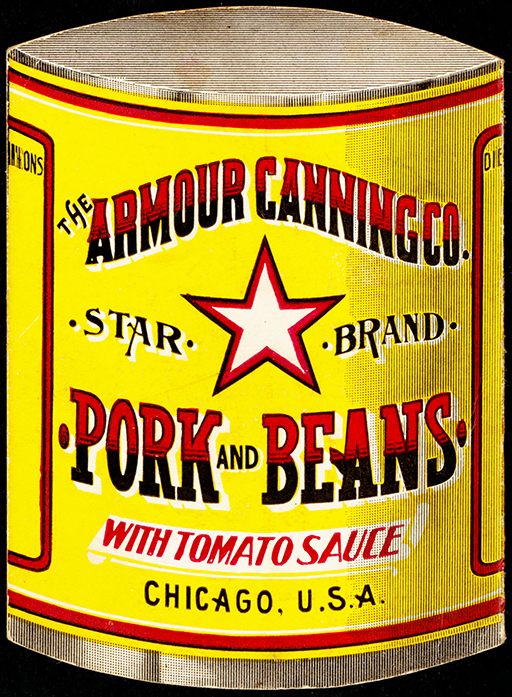
vintage ad for Armour Pork and Beans
Vintage ad for Armour Pork and Beans

The following recipe for pork and beans comes from Lydia Maria Francis Child’s 1841 cookbook The American Frugal Housewife: Dedicated to Those Who Are Not Ashamed of Economy. In this fascinating tome she offers the reader helpful advice and recipes for coping with privation. She cheerfully writes that “the true economy of housekeeping is simply the art of gathering up all the fragments, so that nothing be lost.” She goes on to stress that she means “fragments of time, as well as materials.” For Child, nothing should be thrown away, and all members of the family “should be employed either in earning or saving money.” Children can engage in patchwork or the braiding of straw hats and bonnets, she suggests. Above all, careful household accounts must be kept and the virtue of economy practiced at all times, for only then can one have “the permanent power of being useful and generous.”

Child’s book is indeed part cookbook, part instruction manual on household economy. She offers cures for various ailments (those who wish to preserve their health, she cautions, should never “drink strong green tea, eat pickles, preserves and rich pastry”) and hints on how to endure poverty (avoid “indolent and extravagant habits”).

The following recipe for pork and beans is a simple dish, enough to feed a large family on a cold winter’s night. Serve it with a hearty cornbread doused in fresh butter.

Frugal Pork and Beans

Baked beans are a very simple dish, yet few cook them well. They should be put in cold water and hung over fire the night before they are baked. In the morning they should be put in a colander and rinsed two or times; then again placed in a kettle with the pork you intend to bake, covered with water, and kept scalding hot, an hour or more. A pound of pork is quite enough for a quart of beans, and that is a large dinner for a common family. The rind of the pork should be slashed. Pieces of pork, alternately fat and lean, are the most suitable–cheeks are the best. A little pepper sprinkled among the beans when they are placed in the bean pot will render them less unhealthy. They should be just covered with water when put into the oven and the pork should sink a little below the surface of the beans. Bake for four hours.


Why Fast and Fermented Foods by Christine Baumgarthuber

Would you rather receive The Austerity Kitchen by email? Then sign up for my Substack.

And, if you’d like to help the Kitchen keep cookin’, please consider picking up copies of my books, Why Fast? and Fermented Foods.