
Horseradish: A Condiment Rooted in Tradition

 
horseradish root in cross section – aconiti radix

Sit down, gentlemen, and fall to, with a good hearty appetite; the fat, the lean, the gravy, the horseradish as you like it – don’t spare it.  — William Makepeace Thackeray, Vanity Fair (1848)

Originating in the warmer climes of western Asia, horseradish has since become a favorite condiment of the decidedly cooler climes of Central and Northern Europe, where it is cherished for its peppy, pungent flavor. The 1901 edition of the South Australia Journal of Agriculture reports that the zesty root grows “on a considerable scale in various parts of Bohemia,” favoring  “a deep, loose, strong soil, with plenty of moisture,” which “is considered the most suitable.”

Continue reading
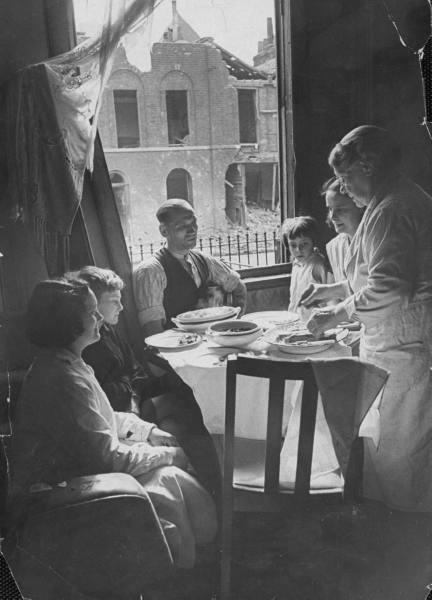
Boarding-House Custard for Blitzed Britons

boarding house meal during the london blitz

Bombed out of a boarding room in Kensington and thus forced to take up residence in the sleepy suburban town of Thames Lockdon, Miss Roach – the thirty-nine year old beak-nosed  narrator of Patrick Hamilton’s 1947 novel The Slaves of Solitude – inhabits a small, pink room on the top floor of a tea house turned boarding house under conditions “of intense war, intense winter and intense blackout in the month of December.”

Continue reading

A Recipe for Victory: Wartime Cornmeal Waffles

 
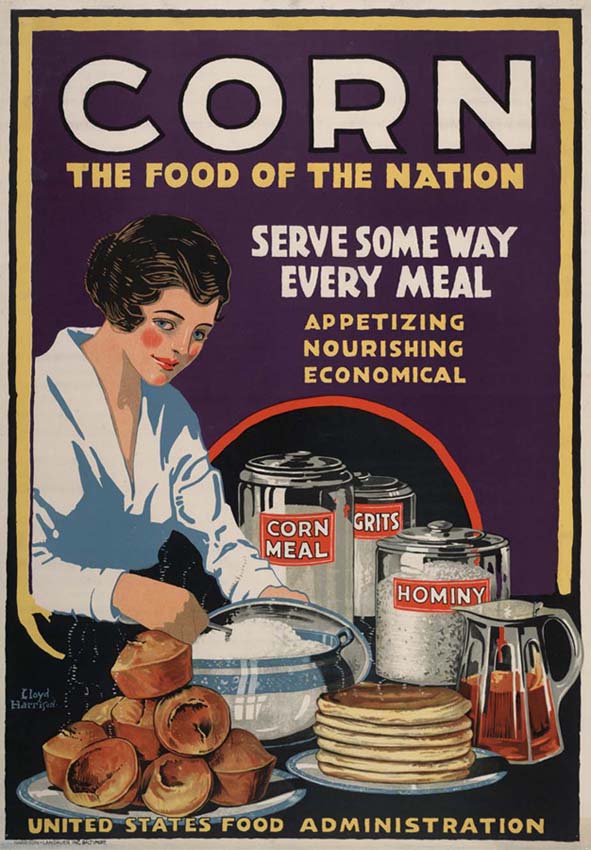
wartime propaganda for corn products

The year 1918 saw the the publication of the Twentieth Century Club War Time Cook Book, an elegant, informative tome filled with useful and tasteful economical recipes. The federal food administrator of Pennsylvania praised the book, deeming it instrumental in winning “the war that is being waged to guarantee the safety of American home” and in ensuring the “permanency of American institutions.” Though he cautions that “much more will be demanded before we can hope for victory, as much perhaps as has been demanded in England and France,” he assures readers that “there is no more important war activity in which women may engage than the careful conservation of our food supply which is altogether inadequate to the needs our own men and our allies at the fighting front.”

Continue reading