
From Caernarvonshire: Thin Welsh Barley Cakes

A cottage on earth, and a castle in air,
And Diana Mereryd’s white apron shall wear,
And bake barley bread to a tender song
Of Love in a cottage, that always was young.

The old Welsh rhyme “Bara Haidd” (“Barley Bread”) celebrates the central role barley played in the lives of the Welsh peasantry, who valued it for its ability to withstand cold weather and rocky soil. In the mountainous region of Caernarvonshire, the peasantry lived almost exclusively on barley, buttermilk, oats, cheese and potatoes.

Violent storms, however, prevented the widespread cultivation of barley. Farmers would plant their crop only to have it decimated by the region’s merciless winds; half the country then remained as meadows and wastelands.

Life was difficult in mountainous Caernarvonshire. During the summer months, the peasantry herded their sheep and small cattle to wild and solitary uplands lined with walls of dry stone, which were used to mark the boundaries of a particular grazing area. The stone for these walls was carried by the peasants up the steep sides of the lofty mountains — a dangerous and tiresome business.

The region’s homes were also built of stone, with deep-set windows containing only a single pane. Moss plugged the thick walls of these simple cottages, which were sometimes drafty and cold. But their warm, roomy chimney corners offered a cozy retreat during winter nights when fires fed on peat moss blazed in the cottage fireplace.

Snowdon highest mountain in Wales UK Snowdon, the highest mountain in Wales

The longevity of the inhabitants of these mountainous regions was attributed to their simple diets. Here is an 1867 recipe for barley cakes from a Welsh hermit (Meudwy) of ancient lineage who lived in a cell cut out of a rock opposite the Well of St. Gover. His diet, like that of the Caernarvonshire peasants, was austere but wholesome.

Thin Welsh Barley Cakes

Mix fine barley meal and milk together to the consistency of batter, and pour slowly on the bake-stone out of a jug until it has formed a circle the size of a small plate, then let it bake slowly. It ought to be very thin but soft, like a pancake or a pikelate; it is likewise eaten with cold butter.


Why Fast and Fermented Foods by Christine Baumgarthuber

Would you rather receive The Austerity Kitchen by email? Then sign up for my Substack.

And, if you’d like to help the Kitchen keep cookin’, please consider picking up copies of my books, Why Fast? and Fermented Foods.

Wheatless Wartime Boston Brown Bread

“FUEL IS FOR FIGHTERS. Do not waste it. Save WHEAT, MEAT, SUGARS, AND FATS. Send more to our Soldiers, Sailors and Allies.”

As a professor of nutrition at Columbia University, Mary Schwartz Rose made it her ambition to show the American housewife that the above message from the United States Food Administration did not necessarily mean months of tasteless meals lacking in nutrition. In her 1918 cookbook Everyday Foods in War Time, Rose extols the virtues of the wheatless, sugarless diet. To give up wheat, so “soft yet firm,” takes “courage and resolution,” she admits. And sugar does tempt from the soda fountain, bakery and candy shop. But Rose reminds us that oatmeal is rich in iron, one-half pound of cornmeal is enough to furnish “everything needed by the body,” and a touch of calcium-rich molasses can protect against the siren song of cane sugar.

wartime ration poster for cottage cheese
An American poster from the First World War

The following recipe for wartime Boston brown bread is a perfect example of a recipe that proves more nutritious and delicious than its peacetime counterpart–Rose even makes a special point of mentioning that this recipe has “two and one half times the food value of a twelve-ounce loaf of white bread.” If desired, serve this bread with butter and honey, or with Mystic Baked Beans.

Wartime Boston Brown Bread

1 cup rye meal
1 cup corn meal
1 cup finely ground oatmeal
1 1/2 cups milk
3/4 teaspoon baking soda
1 teaspoon salt
1 cup molasses
2 teaspoons baking powder

Mix and sift dry ingredients, add molasses and milk, stir until well mixed, turn into a well-greased mold, and steam three and one-half hours. The cover should be greased before being placed on the mold. The mold should never be filled more than two-thirds full. A one-pound baking powder box makes the most attractive shaped loaf for steaming; place mold on a trivet in kettle containing boiling water, allowing water to come half-way up around mold; cover closely and steam, adding as needed more boiling water. One cup chopped peanuts and one cup dates may be added.


Why Fast and Fermented Foods by Christine Baumgarthuber

Would you rather receive The Austerity Kitchen by email? Then sign up for my Substack.

And, if you’d like to help the Kitchen keep cookin’, please consider picking up copies of my books, Why Fast? and Fermented Foods.

Clostridium Capers: The Wonders of Salt Rising Bread

Salt rising bread is a natural marvel. A bit of cornmeal, a splash of milk and a few cups of flour result in beautiful loaves of delicious bread.

While its exact origins are unknown, salt rising bread was first popular in Ireland and Scotland during the seventeenth century. Its popularity continued well into the twentieth century, especially during times of rationing and dearth, as the bread has an earthy, cheesy flavor that precludes the need for additional toppings. This cheesy flavor comes from Clostridium, the bacteria that leavens the bread.

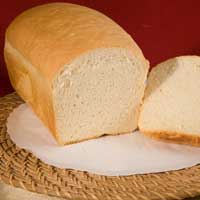
A Loaf of Salt Rising Bread
A loaf of salt rising bread

Naturally present on coarse-grind cornmeal, Clostridium just needs some milk (or water), potatoes and salt to leaven this unique bread. And it will only cost you a $1.50 per loaf!

Amishrecipes.net has a fantastic salt rising bread recipe:

Amish Salt Rising Bread Recipe

2 1/2 cups potatoes, sliced
2 tablespoons cornmeal
1 1/2 tablespoons salt
1 quart boiling water
1 1/2 teaspoons granulated sugar
1 teaspoon baking soda
1 cup warm milk
1 tablespoon shortening, melted
11 cups flour

Sprinkle 1 tablespoon salt and the cornmeal over potatoes. Add boiling water and stir until salt has dissolved. Cover and keep warm from noon to the following morning.

Drain off liquid into a large bowl. Add the baking soda, 1 1/2 teaspoons sugar and 5 cups flour to the liquid. Stir until ingredients are well blended. This sponge should be the consistency of cake batter. Set mixture in a warm place, and let rise until light and full of bubbles. This requires about 1 1/2 hours.

Scald milk and cool to lukewarm. Add shortening. Add milk and remaining flour to sponge. Knead for 10 to 12 minutes and shape into loaves. Makes 3 medium-size loaves. Let rise until light – about 1 1/2 hours.

Bake at 350 degrees F for 1 hour.


Why Fast and Fermented Foods by Christine Baumgarthuber

Would you rather receive The Austerity Kitchen by email? Then sign up for my Substack.

And, if you’d like to help the Kitchen keep cookin’, please consider picking up copies of my books, Why Fast? and Fermented Foods.