From Hermann, Missouri: Depression Caramels

In the early 1830s, the German Settlement Society of Philadelphia traveled to the lush and rugged Gasconade River Valley. There they founded the colony of Hermann, Missouri; the Society thought the Gasconade Valley, with its green rolling hills, resembled their beloved valley of the Rhine River, and they wanted to establish a German community devoted to farming and commerce in the heart of it.

The colony quickly grew into a town of successful vintners. The rocky hills of the Gasconade Valley, while inimical to farming, proved perfect for cultivating grapes, and large vineyards were planted along the hillsides.

Business was brisk in Hermann until Prohibition, when the vineyards were forced to close. So devastating did Prohibition prove to the town that residents said the Great Depression ravaged Hermann ten years before it hit the rest of the country.
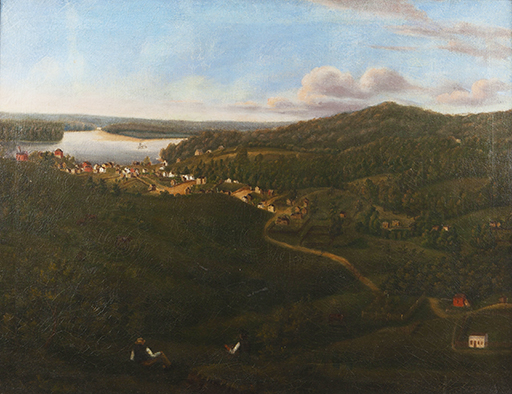
Landscape painting of Hermann Missouri circa 1850
Vista on Hermann, Missouri ca. 1850 via Wikimedia Commons

The following recipe for caramels comes from an old Hermann farming family. Dated 1938, it was found handwritten in a cookbook. Made from readily available ingredients, the caramels were a simple delight during the dark days of the Depression.

Hermann Caramels

2 cups sugar
1 can (1 cup) corn syrup
1 can (1 cup) milk
Pinch of salt
1/2 cup butter
1 tsp vanilla
Nuts, if desired

Put sugar, syrup, butter and salt in a saucepan. Cook into a clear, thick consistency. Add milk gradually so as to not stop the boiling. Cook until a firm ball forms. Add vanilla and nuts. Place in a buttered pan until cool. Put on a marble slab or oiled paper [wax paper] and cut into 1-inch squares. Wrap in oiled paper.


Why Fast and Fermented Foods by Christine Baumgarthuber

Would you rather receive The Austerity Kitchen by email? Then sign up for my Substack.

And, if you’d like to help the Kitchen keep cookin’, please consider picking up copies of my books, Why Fast? and Fermented Foods.

Mystic Baked Beans

Mystic, Connecticut was once a bustling port filled with whaling ships set to embark on dangerous, and lucrative, voyages across the world.

A ship’s homecoming after such a voyage brought promise not only of valuable spermaceti, which was used in cosmetics and candles, but also of more exotic cargo, like tropical fruit and spices. Seafaring husbands would often bring their wives these goods from far-off places like New Zealand and Japan, and the suppers enjoyed on the eve of a ship’s return were indeed festive affairs.

Charles W. Morgan Whaling Ship out of Mystic Connecticut
Mystic’s most famous whaling ship: The Charles W. Morgan

Sometimes, if a whaler was lucky enough to have enjoyed a bit of leisure on the high seas, he would also present his wife with a crimping wheel or birdcage delicately carved from whalebone. Known as scrimshaw, these intricate works of whalebone were treasured by families of seafaring men.

But the return of a whaling ship was a special occasion. The lives of Mystic families were usually far more austere. Sunday heralded a roast beef, or some boiled fowl. The rest of the week saw stews of beans and root vegetables, with a piece or two of salt pork thrown in for flavor.

On the busiest day of the week, wash day, when the stove was taken over by boiling pans of water and steaming irons, only the simplest dish was served — usually a sweet and savory pot of baked beans. Here’s a traditional recipe, as recorded in The Mystic Seaport Cookbook, for a tasty pot of baked beans from an old seafaring family.

Sea Cook’s Baked Beans

2 pounds dried beans
1/2 to 3/4 pound salt pork
1 apple
1 medium-sized onion (optional)
1/2 cup sugar
1/2 cup dark molasses
1 teaspoon dry mustard
1/2 teaspoon pepper
1 1/2 teaspoons salt

Soak beans in cold water overnight. In the morning, parboil until skins crack. Transfer to beanpot and add salt pork cut down to the rind in cubes. Cut the apple into chunks and bury them and the onion in the beans. Mix sugar, molasses, mustard, pepper and salt with about 2 cups boiling water and pour over beans and pork. Bake in a 300 degree F. oven for 6 hours. Add water when necessary. If you like the pork crisp, take off the cover for the last 30 minutes or so. Makes 8 to 10 servings.


Why Fast and Fermented Foods by Christine Baumgarthuber

Would you rather receive The Austerity Kitchen by email? Then sign up for my Substack.

And, if you’d like to help the Kitchen keep cookin’, please consider picking up copies of my books, Why Fast? and Fermented Foods.