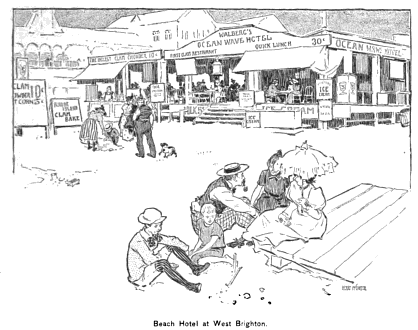
The estival attractions of Coney Island were such that few late nineteenth-century New Yorkers could resist them. Each weekend crowds of weary shopgirls, clerks, bricklayers and jobbers of every stripe would flock to its white-sand beaches, making their way by train or foot for a weekend seaside idyll, which provided welcome respite from their urban toil.
An article in the July 1896 edition of Scribner’s Magazine reports that the majority of Coney Island pleasure seekers came from the ranks of the middle and lower middle classes, people who enjoyed such meager leisure time that they could ill-afford long schleps upstate. “Evidence that Coney Island’s crowds are made up most largely of those who are town-stayed all summer, lies in the color of the crowd’s hands and faces,” article author Julian Ralph writes. “From the waxen whiteness of the women and girls whose waking hours are spent amid gaslight, to the pinker hue of the men who have leisure to walk to and from luncheon — if not to business — every morning the color of all is the same and only the shades of it differ.”
Continue reading
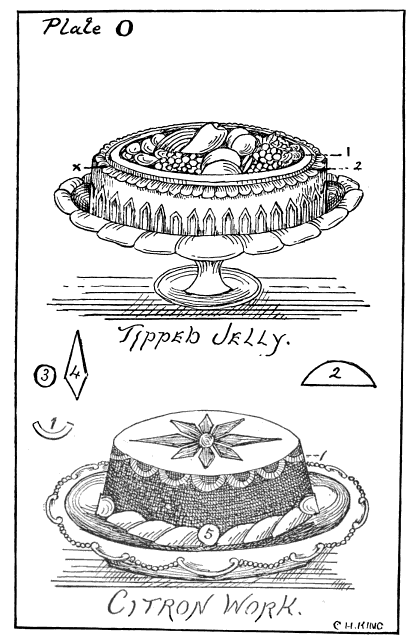
 The Austerity Kitchen