The Austerity Kitchen Challenge: Lentil and Brown Rice Salad

illustration of yellow lentils

Jacob sold his birthright for a pot of lentils; and, during the rebellion of Absalom, Barzillai brought them as a gift to David. Aristophanes rejoiced in his newly found fame as it meant he would never again consume a lentil. “Now that I am rich,” he wrote, “I will no longer eat lentils.” During the nineteenth century the Welsh used lentils as cattle fodder and Romans served salted lentils at funeral banquets.

Lentils have indeed enjoyed a varied and wondrous history. They were a staple among the lower classes, who enjoyed them with everything from sauerkraut to richly pungent blood sausages. They could be stored many years and transported vast distances. Ranging in color from black to red to a brilliant marigold yellow, they are praised in a Hindu proverb as being the very staff of life.

For this month’s Austerity Kitchen Challenge, the Kitchen has developed a recipe for a lentil and brown rice salad, which can feed four or five people for under $5.00. The amount of rice and lentils can be easily varied to suit your tastes and needs, and you can prepare the mixture ahead of time and serve it over salad throughout the week. Serve lentil and brown rice salad with warm pita bread and hummus.

Lentil and Brown Rice Salad

6 cups cooked brown rice
2 cups cooked brown lentils
2 large onions, chopped into large pieces
2 tablespoons olive oil
3 tablespoons apple cider vinegar
3-4 tablespoons sugar
3 tablespoons fresh cilantro (optional)
2-3 heads of romaine, chopped
3 tomatoes, chopped
2 cucumbers, sliced
1/2 red onion, chopped
chili powder
salt to taste

Brown the chopped onions in olive oil in a large pot. Add sugar, cilantro and cider vinegar. Stirring constantly, cook for three minutes over low heat. Turn off heat. Add cooked rice and lentils; mix thoroughly. Add salt to taste.

Toss romaine, tomatoes, cucumbers and red onion in a large salad bowl. Sprinkle chili powder over salad. Put salad on serving plates, top with lentil rice mixture and pour dressing over the entire salad.

Dressing:

2/3 cup olive oil
1/4 cup white vinegar
1/4 cup lemon juice
1/2 teaspoon mustard
1/4 teaspoon salt
1 clove crushed garlic (optional)

Mix olive oil, vinegar, lemon juice, mustard, salt and garlic together until blended. Pour over lentil and brown rice salad. Amounts can be varied to suit taste.


Why Fast and Fermented Foods by Christine Baumgarthuber

Would you rather receive The Austerity Kitchen by email? Then sign up for my Substack.

And, if you’d like to help the Kitchen keep cookin’, please consider picking up copies of my books, Why Fast? and Fermented Foods.
From the Colonial Hearth: Indian Pudding

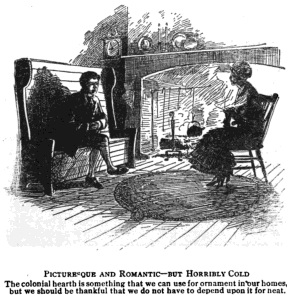
The kitchen hearth was the center of colonial family life, providing a comfort and warmth not found in the rest of the house. Over the kitchen table loomed the hearth’s great stone chimney, festooned with hooks and trammels supporting black pots and kettles, and garlanded with strings of peppers, pumpkin and dried apples.

illustrated scene from a colonial dining room


The hearth fire, which in winter burned all day and night, was fed by tremendous logs that the family transported by sled. Sometimes these early hearths had seats built into them; the children of the house vied with one another for these rare spots of warmth from which they could gaze up and watch the stars of the night sky sparkling at the opening of the great chimney-throat.

colonial hearth
A colonial hearth

In New York, the hearths were modeled on the Dutch design. One observant traveler described the New York hearth as being “very droll-like” in that “they have no jambs nor lintell as we have, but a flat grate, and there projects over it a lum in the form of the cat-and-clay lum, and commonly a muslin or ruffled pawn around it.” In other regions, hearths were more austere–just a plain brick or stone fireplace over which hung a kettle or two.

The meals prepared in the colonial hearth were simple and could be left simmering or baking for hours at a time. The colonial housewife prepared stews of beans, salt pork and vegetables in round iron kettles. Bread was baked in a separate chamber, usually off to the side of the fireplace. Once the bricks were deemed hot enough, in went the bread or pudding to bake until finished.

Below is a recipe for Indian pudding, a favorite from the droll colonial hearth. Serve with cream or sweetened milk.

Indian Pudding

3 cups milk
1/2 cup molasses
1/3 cup yellow cornmeal
1/2 teaspoon ground ginger
1/2 teaspoon ground cinnamon
1/4 teaspoon salt
1 tablespoon butter

In saucepan mix milk and molasses; stir in cornmeal, ginger, cinnamon, and salt. Cook and stir till thick, about 10 minutes. Stir in butter. Turn into a 1-quart casserole. Bake, uncovered, at 300 degrees about 45 minutes to one hour.


Why Fast and Fermented Foods by Christine Baumgarthuber

Would you rather receive The Austerity Kitchen by email? Then sign up for my Substack.

And, if you’d like to help the Kitchen keep cookin’, please consider picking up copies of my books, Why Fast? and Fermented Foods.

Wheatless Wartime Boston Brown Bread

“FUEL IS FOR FIGHTERS. Do not waste it. Save WHEAT, MEAT, SUGARS, AND FATS. Send more to our Soldiers, Sailors and Allies.”

As a professor of nutrition at Columbia University, Mary Schwartz Rose made it her ambition to show the American housewife that the above message from the United States Food Administration did not necessarily mean months of tasteless meals lacking in nutrition. In her 1918 cookbook Everyday Foods in War Time, Rose extols the virtues of the wheatless, sugarless diet. To give up wheat, so “soft yet firm,” takes “courage and resolution,” she admits. And sugar does tempt from the soda fountain, bakery and candy shop. But Rose reminds us that oatmeal is rich in iron, one-half pound of cornmeal is enough to furnish “everything needed by the body,” and a touch of calcium-rich molasses can protect against the siren song of cane sugar.

wartime ration poster for cottage cheese
An American poster from the First World War

The following recipe for wartime Boston brown bread is a perfect example of a recipe that proves more nutritious and delicious than its peacetime counterpart–Rose even makes a special point of mentioning that this recipe has “two and one half times the food value of a twelve-ounce loaf of white bread.” If desired, serve this bread with butter and honey, or with Mystic Baked Beans.

Wartime Boston Brown Bread

1 cup rye meal
1 cup corn meal
1 cup finely ground oatmeal
1 1/2 cups milk
3/4 teaspoon baking soda
1 teaspoon salt
1 cup molasses
2 teaspoons baking powder

Mix and sift dry ingredients, add molasses and milk, stir until well mixed, turn into a well-greased mold, and steam three and one-half hours. The cover should be greased before being placed on the mold. The mold should never be filled more than two-thirds full. A one-pound baking powder box makes the most attractive shaped loaf for steaming; place mold on a trivet in kettle containing boiling water, allowing water to come half-way up around mold; cover closely and steam, adding as needed more boiling water. One cup chopped peanuts and one cup dates may be added.


Why Fast and Fermented Foods by Christine Baumgarthuber

Would you rather receive The Austerity Kitchen by email? Then sign up for my Substack.

And, if you’d like to help the Kitchen keep cookin’, please consider picking up copies of my books, Why Fast? and Fermented Foods.